





Reinsurance: The difference between what the insurer writes and what it keeps

Quota share, surplus, facultative, excess of loss and stop loss treaties in programme order, premium cessions with ceding commission and ceded unearned premium, claim recoveries per event and per layer, and bordereaux that tie — inside Insurance Management.

Priced on policies in force. Free instant access, no credit card required.

Works with
  • Insurance Management
Reinsurance in the Insurance Suites: The difference between what the insurer writes and what it keeps
01

A cascade, not a list of percentages

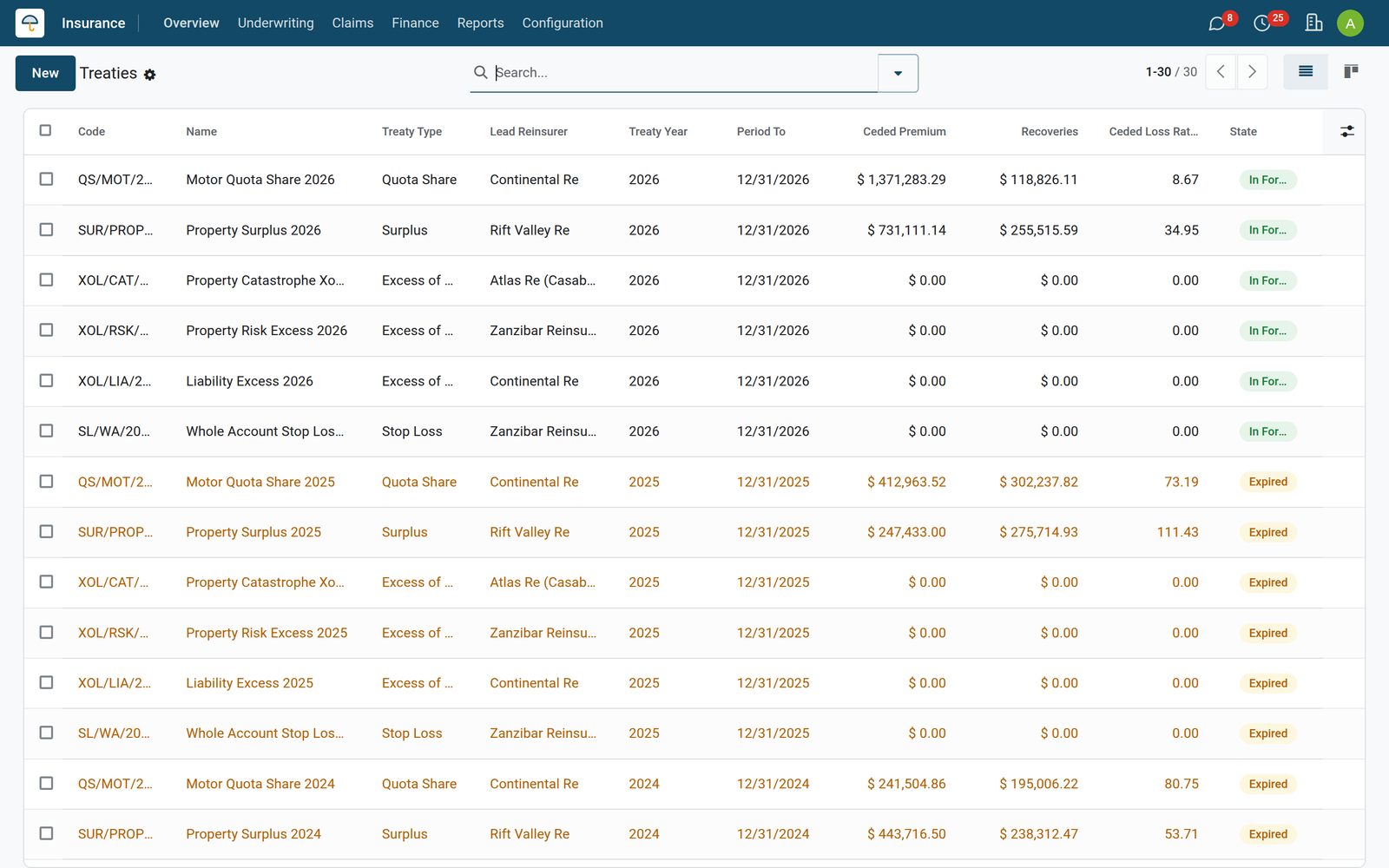
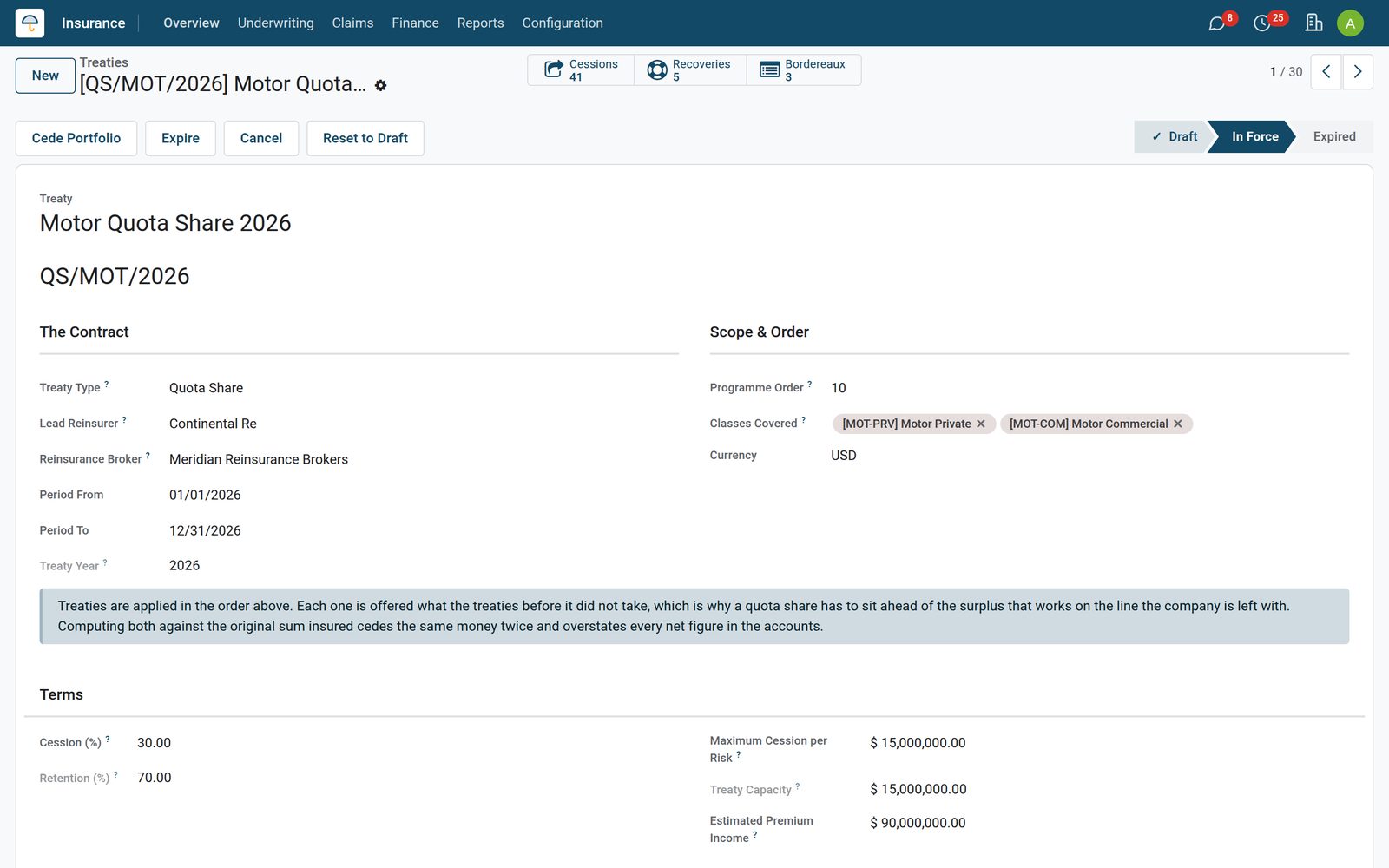
Treaties sit in programme order and each is offered what the treaties above it did not take. A quota share cedes its share of the whole risk first; a surplus works in lines on the retention that is left; facultative sits on top of whatever is still uncovered. Excess of loss responds per risk or per catastrophe event above an attachment point, with reinstatements and the capacity still standing, and stop loss responds to the aggregate loss ratio. A treaty answers for losses inside its period even after it has expired, because cover follows the date of loss.
Reinsurance: A cascade, not a list of percentages
02

Excess of loss layers

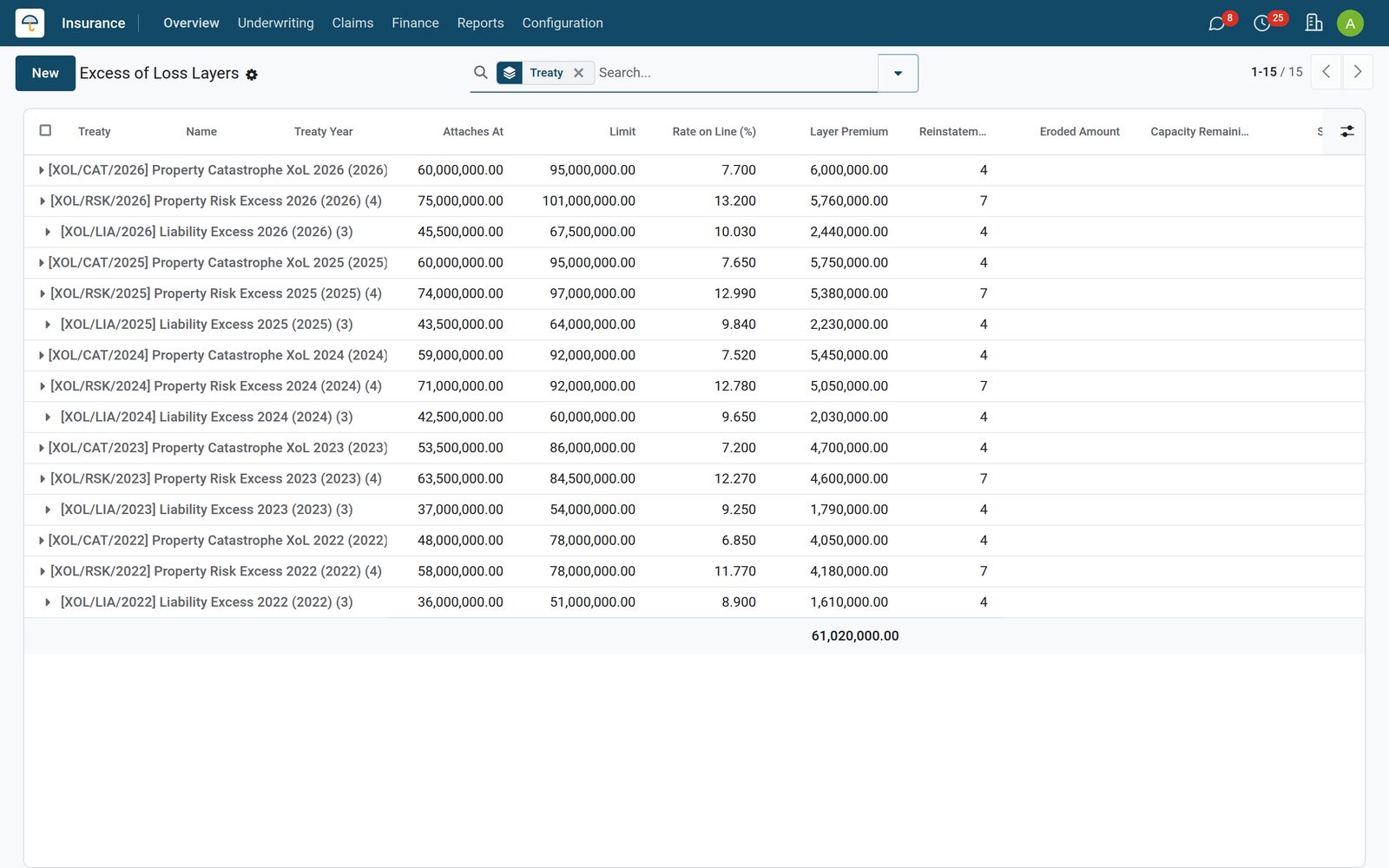
Attachment, limit, rate on line, layer premium, reinstatements, aggregate limit, what has been eroded and the capacity remaining, layer by layer.

Reinsurance: Excess of loss layers
03

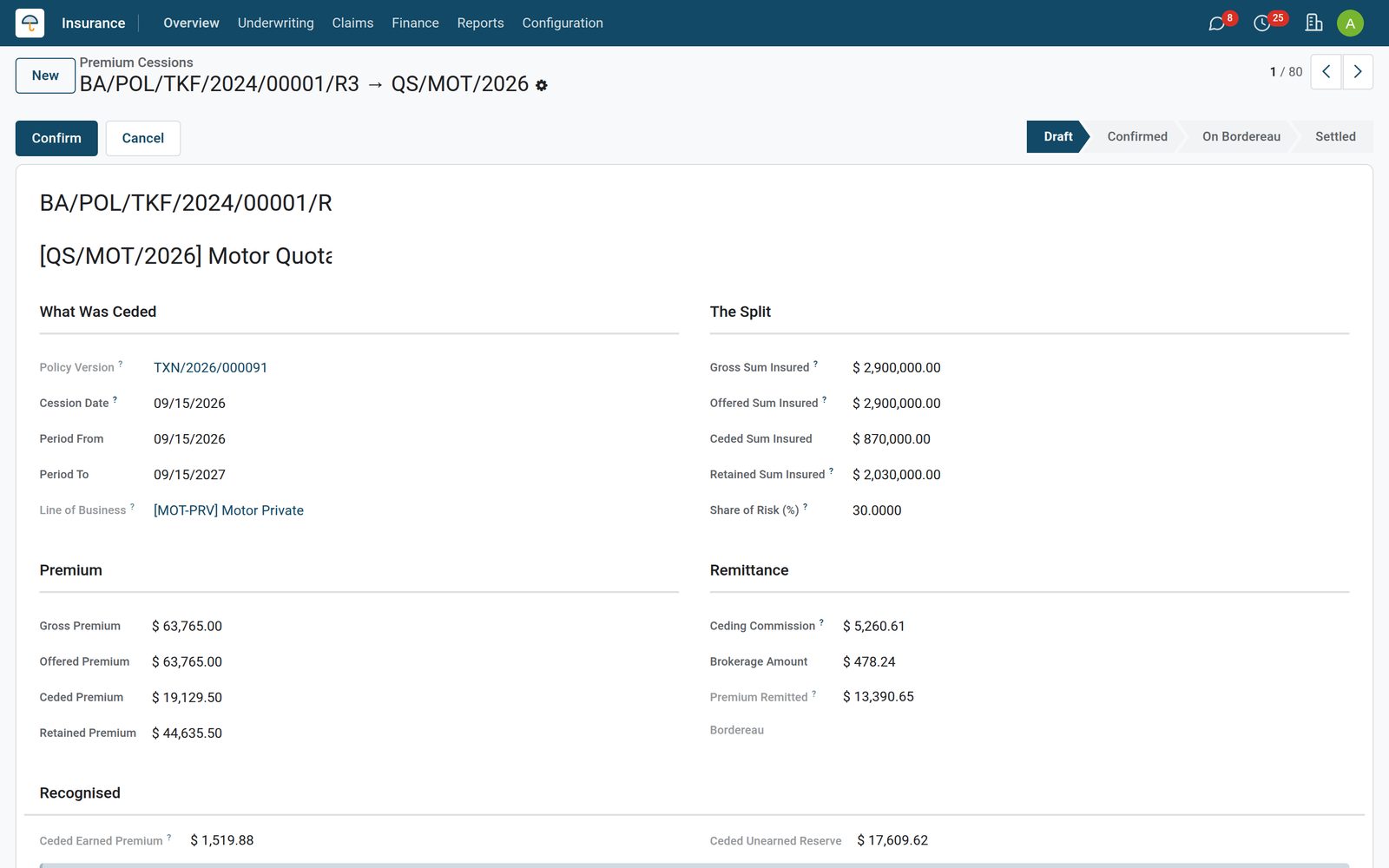
Gross, ceded and net beside every figure

Run the programme over one policy or cede the whole book from the treaty in one press. Every cession records what was offered, what was ceded and what was kept — sum insured, share of risk and premium — with the ceding commission, the brokerage, the premium remitted and the ceded earned and unearned premium from the same premium engine the policy uses. The policy then carries its ceded premium and net written premium, so an unreinsured large risk can be found before a loss finds it.

Reinsurance: Gross, ceded and net beside every figure
04

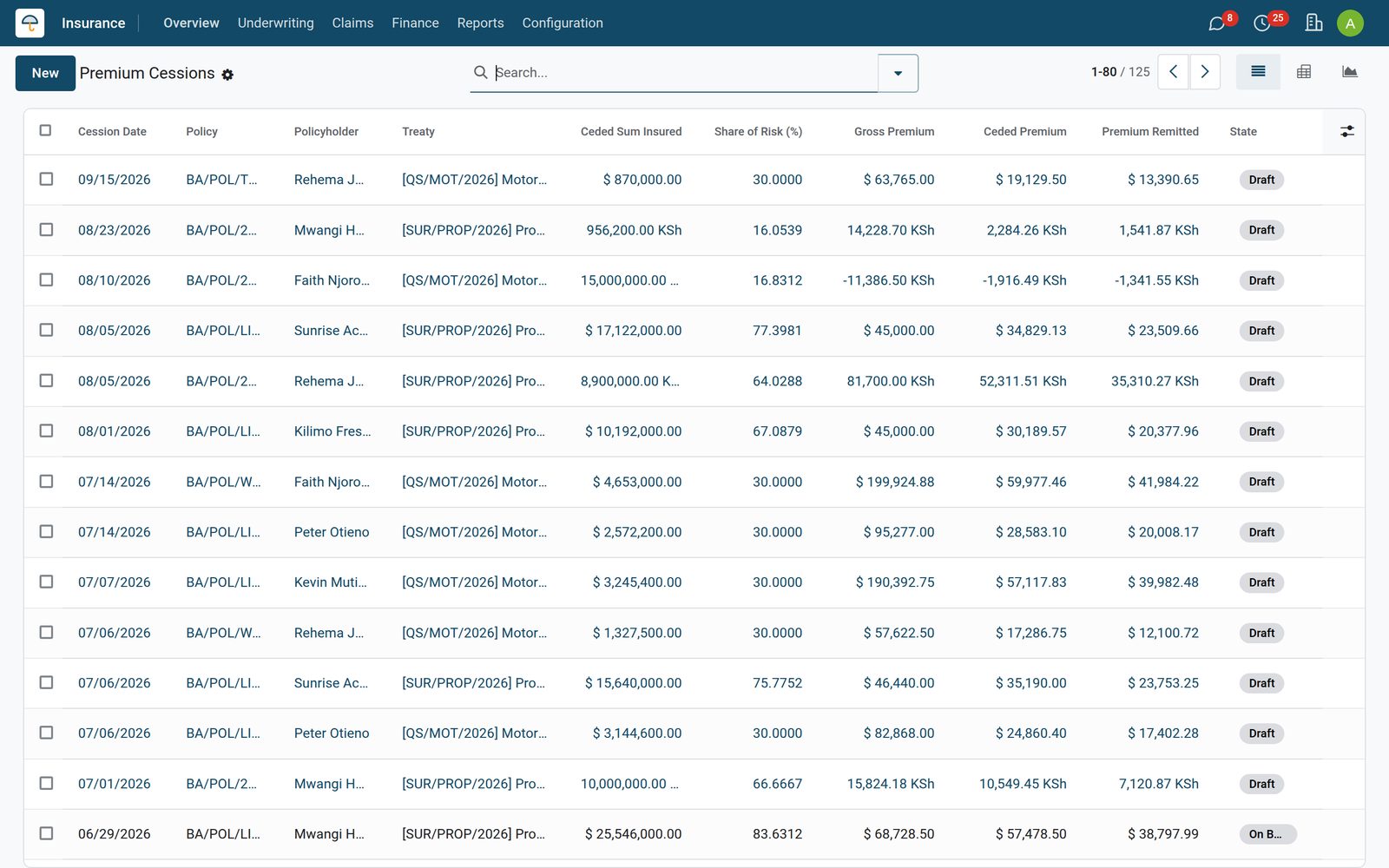
124 premium cessions

Policy, policyholder and treaty with ceded sum insured, share of risk, gross and ceded premium, premium remitted and state — in the policy's own currency.

Reinsurance: 124 premium cessions
05

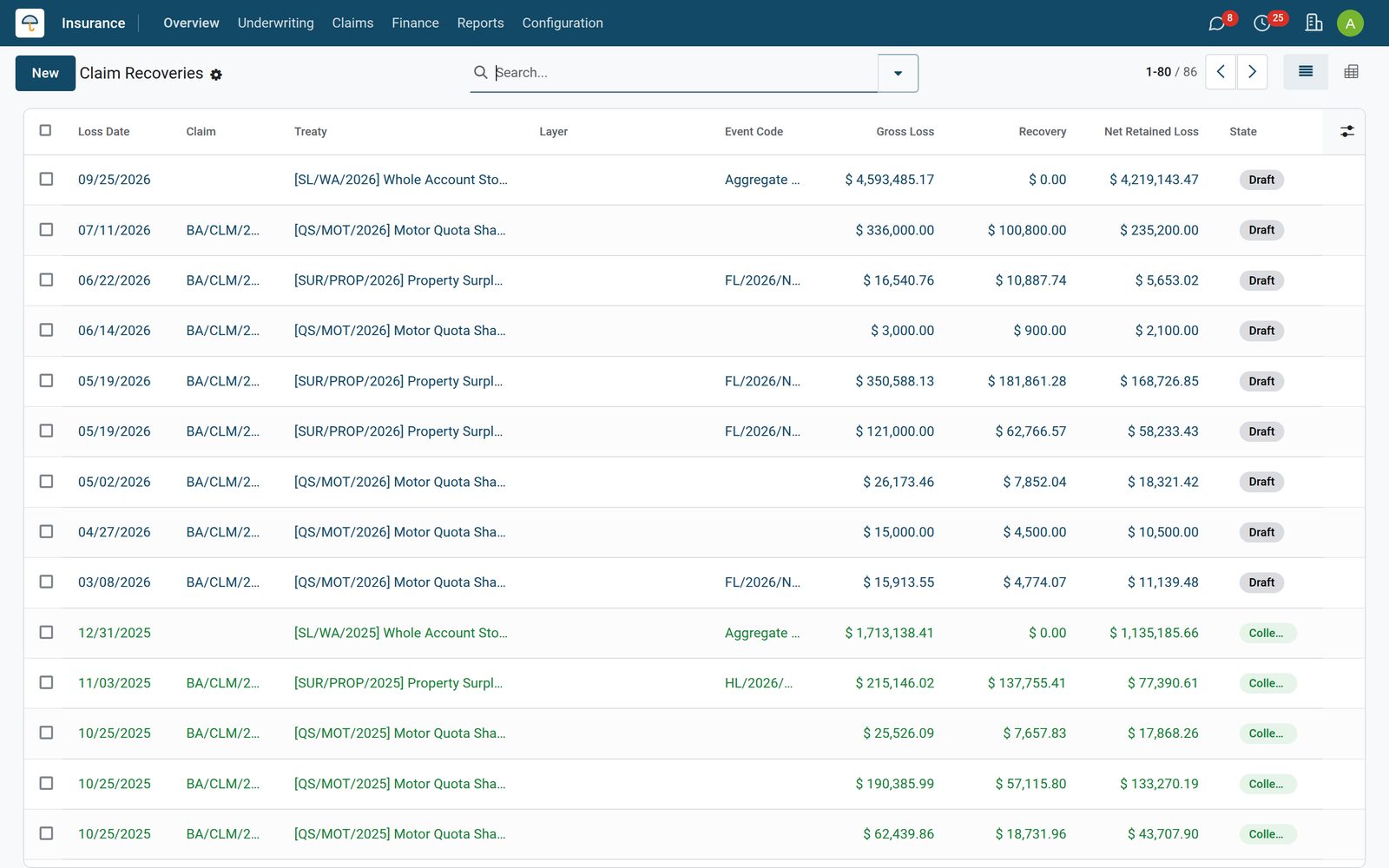
Recovered in programme order, on the date of loss

A claim is recovered proportional treaties first, then each excess of loss layer on what the company is left with, then stop loss on the aggregate result — because excess of loss protects the net account, and applying it to the gross loss recovers the same money twice. Per-event layers gather every claim carrying the same catastrophe code into one event. Each recovery shows the gross loss, what earlier treaties took, the net before this treaty, the recovery and the sentence that explains it.

Reinsurance: Recovered in programme order, on the date of loss
06

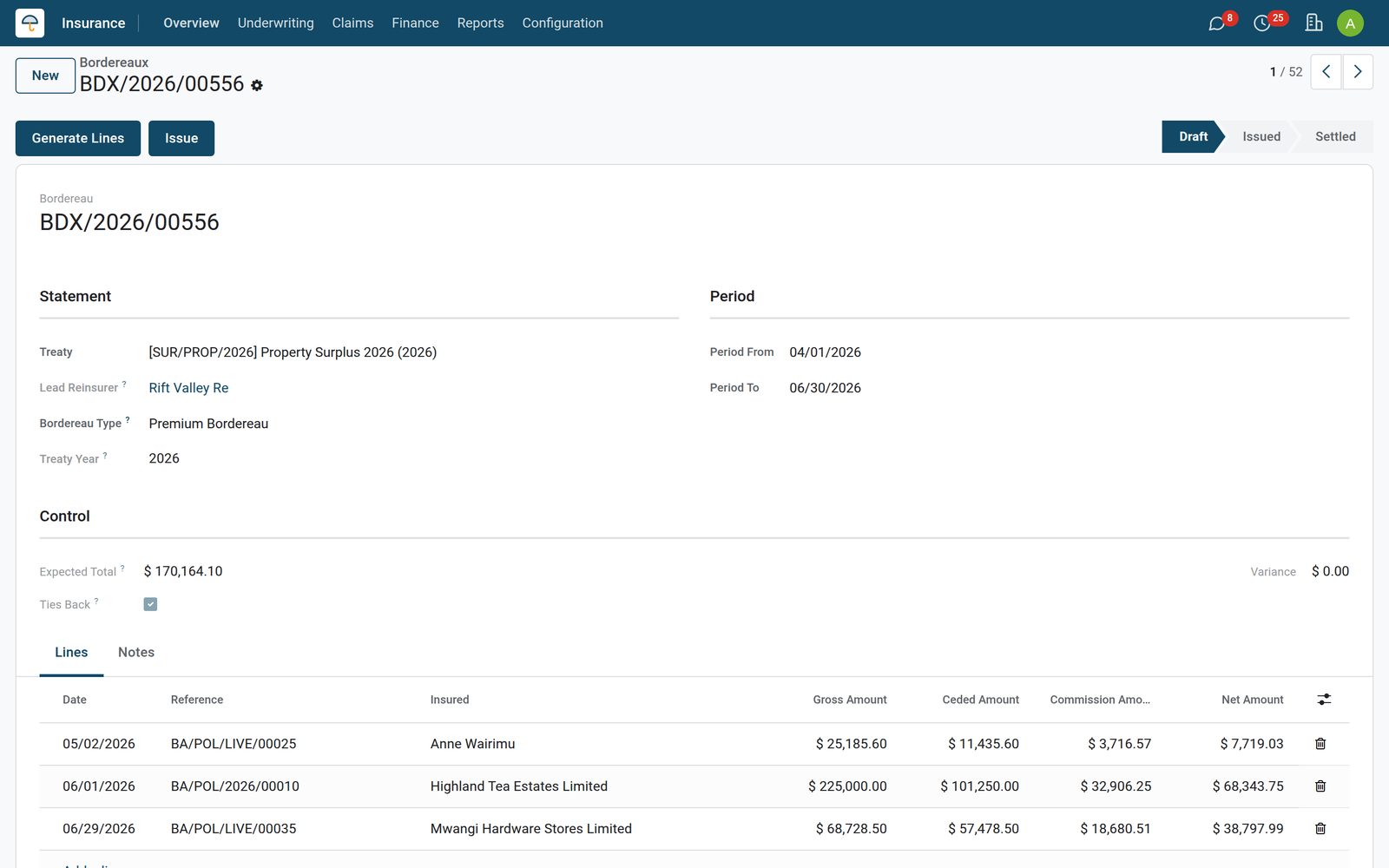
A statement that ties, or it does not go

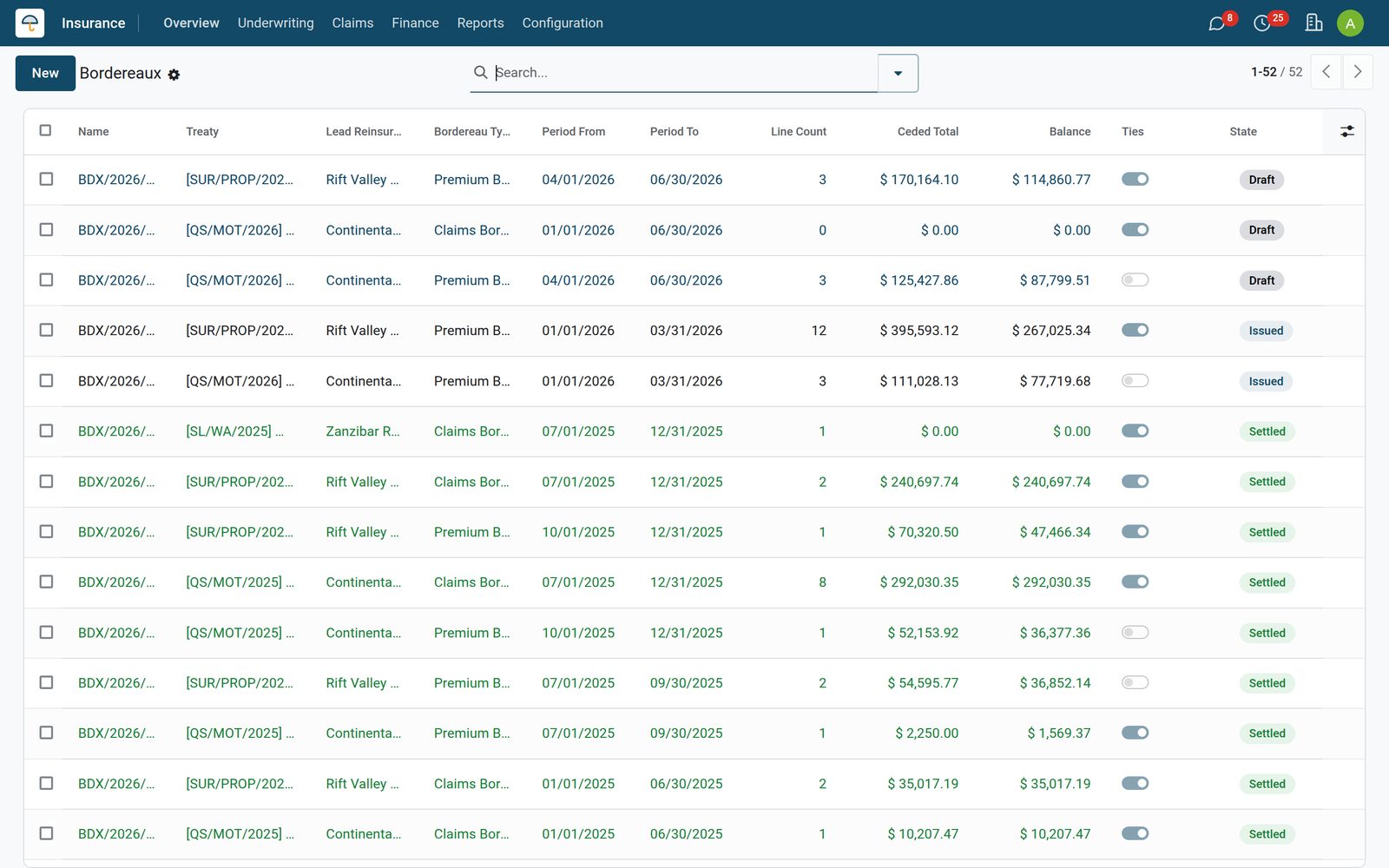
Premium and claims bordereaux per treaty and period, generated from the cessions and recoveries behind them. The bordereau states what it expects from the period and what its lines add up to; an empty bordereau, or one whose lines do not tie to the cessions, is refused at issue. Once issued, both parties have booked from it, so it no longer changes.

Reinsurance: A statement that ties, or it does not go

What's inside

Everything in Reinsurance

19 items in 8 areas, every one shipping with the app today.

  • Reporting

    • Today, yesterday, this week — on every listCessions, claim cessions and bordereaux filter by today, yesterday, this week, last week, this month, last month, this year and last year, on the date each of them is actually measured by.
  • Treaty

    • Five treaty typesQuota share, surplus, facultative, excess of loss and stop loss.
    • Programme orderEach treaty is offered what the treaties above it did not take.
    • Surplus in linesA retention and a number of lines, worked on the line left after the quota share.
    • Cover follows the loss dateAn expired treaty still recovers losses inside its period.
    • RemunerationCeding commission, profit commission, brokerage and the reinsurer's expense allowance.
  • Layers

    • Per risk or per eventAttachment, limit, rate on line and layer premium, with a catastrophe code gathering one event.
    • Reinstatements and erosionReinstatements, the aggregate limit, the eroded amount and the capacity remaining.
  • Panel

    • Signed to 100%Written and signed lines per reinsurer and per layer, with the financial rating.
  • Cession

    • One policy or the whole bookFrom the policy, or every policy at once from the treaty.
    • Offered, ceded, retainedSum insured, share of risk and premium, each three ways.
    • Ceded earned and unearnedFrom the same premium engine that earns the policy.
    • Net on the policyCeded premium, net written premium and whether the risk is reinsured, stored on the policy.
  • Recovery

    • Programme orderProportional first, then each layer on the net, then stop loss.
    • Explained in wordsGross, already recovered, net before this treaty, recovery and the reason.
  • Stop loss

    • Aggregate recoveryAttachment and cover in loss ratio points with a cedant co-participation, booked from today's position.
  • Bordereau

    • Premium and claimsPer treaty and period, generated from the cessions and recoveries.
    • Ties before it goesExpected total against the lines, and refused at issue if it does not tie.
    • Frozen once issuedBoth parties have booked from it, so it no longer changes.

Put Reinsurance to work

Add it to your Insurance Suites plan, priced per policy in force, or start a free trial and see it running first.