

Custom Furniture Production: Every piece made to order, and nothing lost between the quote and the van
BridgeERP takes the size and the timber the customer asked for, turns the order into a job on the floor, and keeps the cut list, the checks and the delivery on the same job.
Free instant access. No credit card required.
 Invoicing
 CRM
CRM Manufacturing
 Point of Sale
 Purchase
 Sales
Sales
The quote carries the customer's own measurements
Timber, finish and the size they asked for are on the order line, so the shop builds what was sold.
- Sales
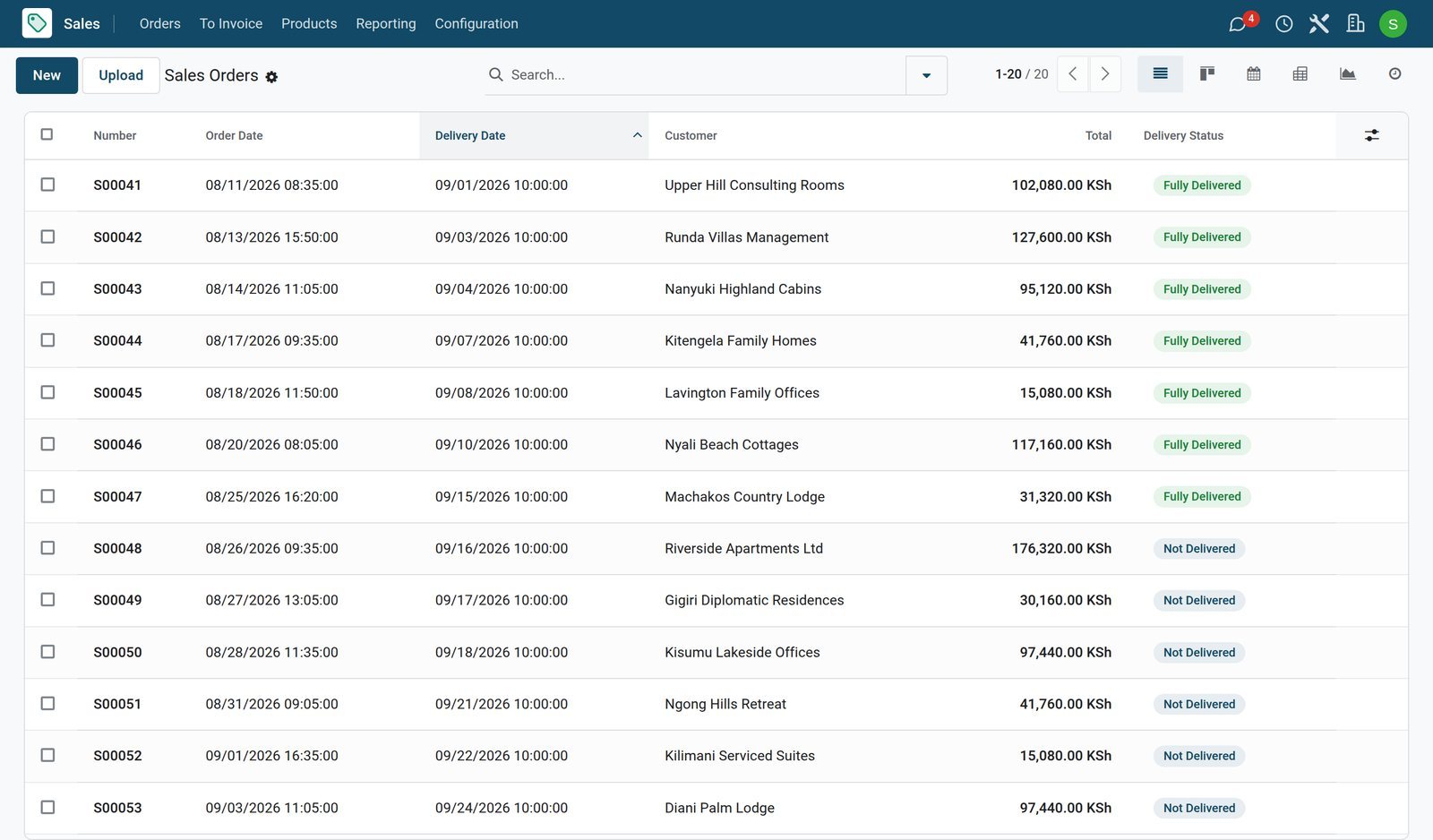
A quotation for one job
A dining table and two bedside tables in mahogany, each at the size the customer gave, still with the customer.
Explore Sales →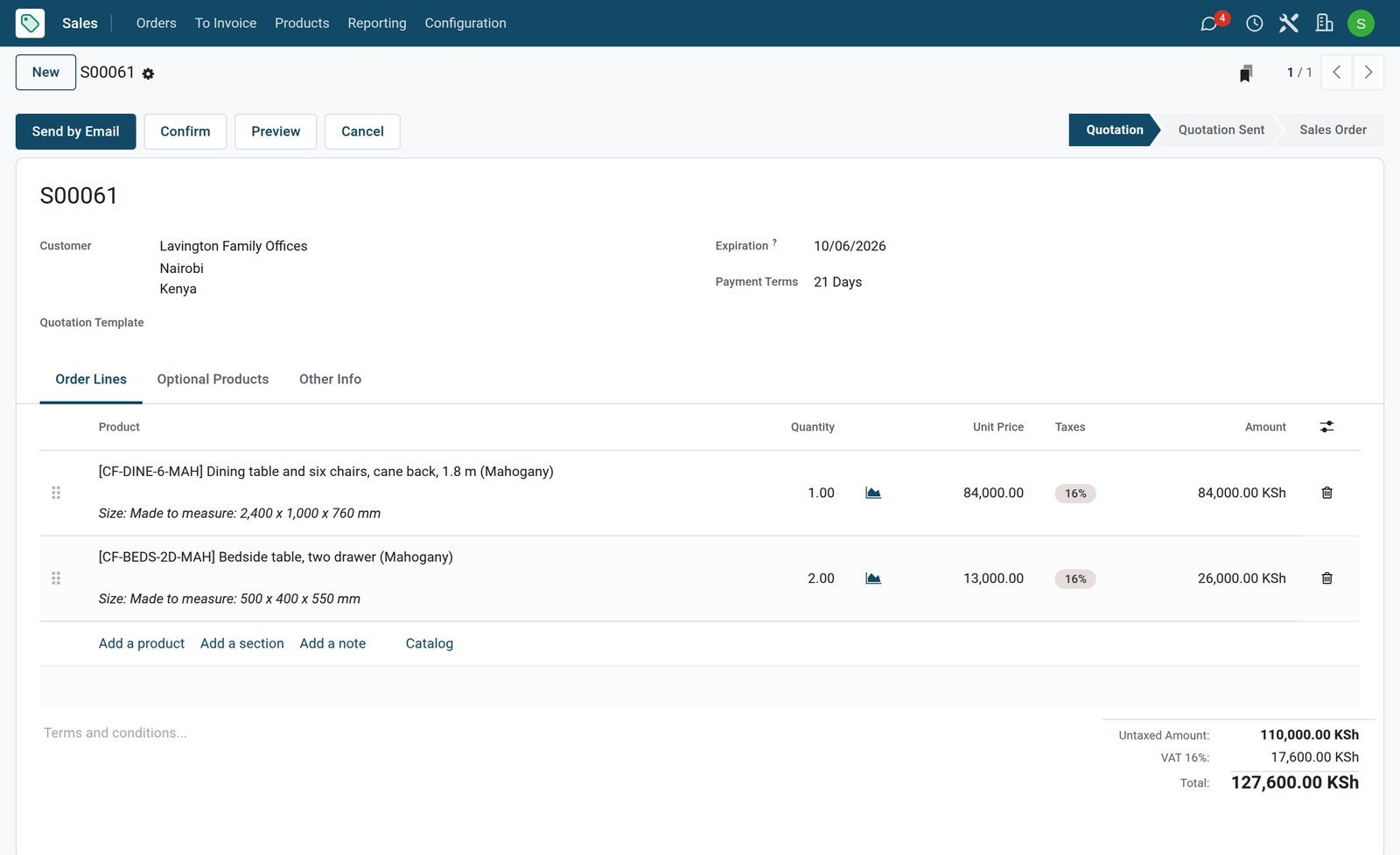
- Sales
What the workshop makes
Ten pieces, each with the price it is quoted at and the timbers it can be made in.
Explore Sales →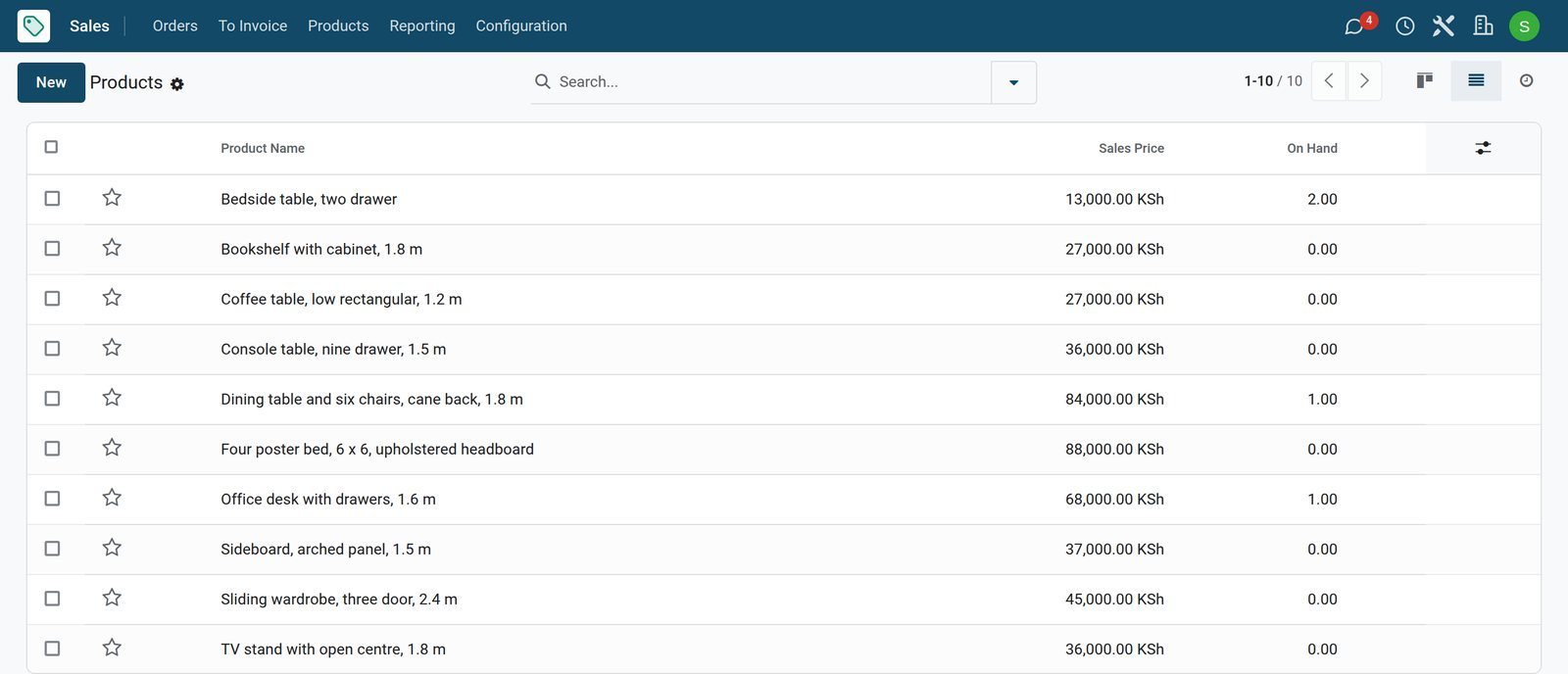
- Sales
Timber and size, set up once
Three timbers make three variants of the piece; the size is typed on the order, not kept as a product.
Explore Sales →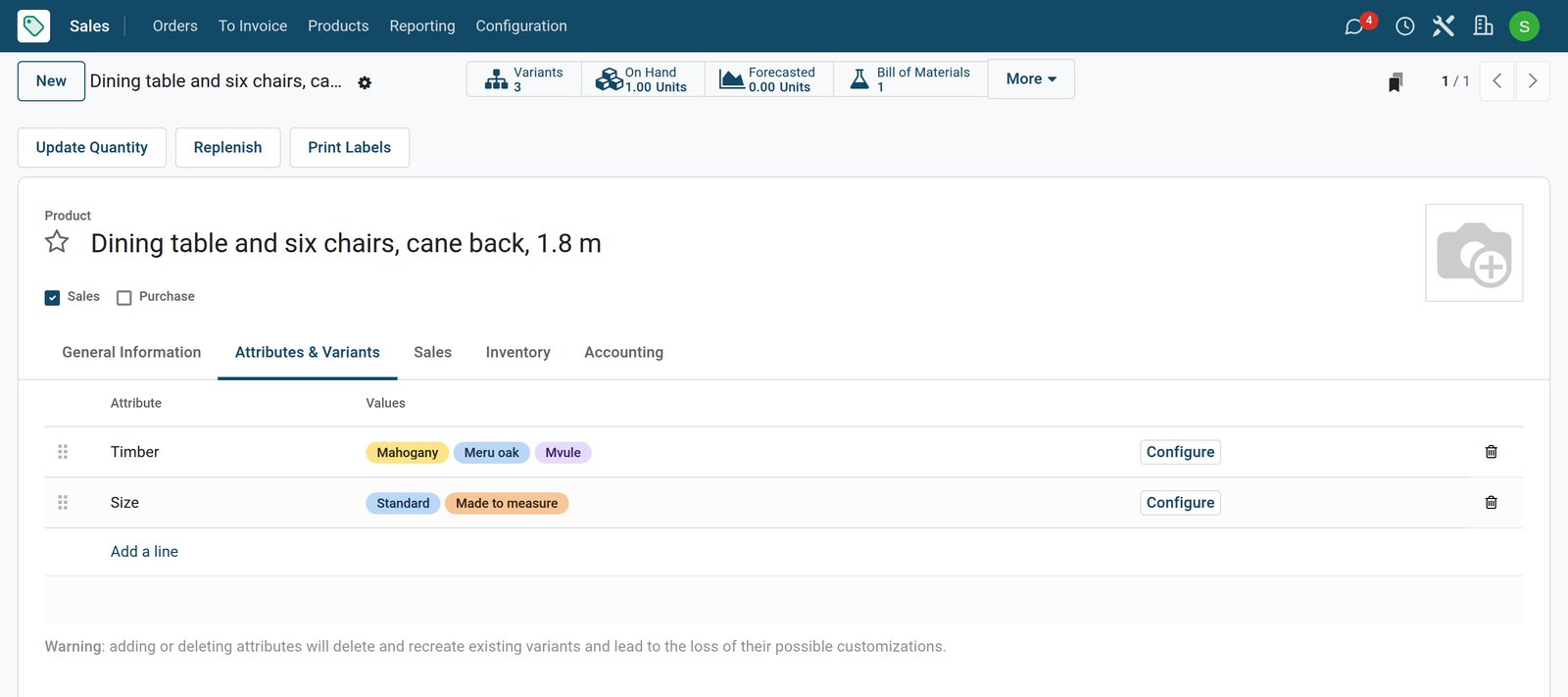
By the numbers
What ships inside
Counted in the product.
- 6
- states a work order moves through, so a bench always knows what is ready to start
- 2
- ways a bill of materials is used: make the piece, or a kit of parts that is picked as one line
- 3
- ways an attribute is handled: a variant for every value, variants on demand, or no variant at all
- 8
- kinds of check a control point can ask for, from a pass-fail to a measurement with a tolerance
Inside the app
What it holds for a workshop
The things a shop that builds one-offs has to keep straight.
The customer's size on the order
A made-to-measure line carries the millimetres the customer gave, and the shop reads them off the same order.
One job per piece
Confirming the order raises a manufacturing order for each piece, with the order number on it as the source document.
The cut list is the bill of materials
Boards, sheets, hardware and finishes for one piece, with the board line that belongs to the timber the customer chose.
Benches, not a production line
Each step is a work order on a work centre, so you can see what the machine shop, the benches and the booth are on.
Checked before it leaves
A finish inspection and a squareness measurement on every piece, and a check against the order before it goes on the lorry.
Materials on a reorder point
Timber, board, lacquer and handles have a minimum, so the list says what to buy before a job stops.
Delivered against the job
The delivery note carries the order it belongs to, and the invoice follows on the terms that customer has.
Nothing sits in the store
Pieces are made against orders, so the finished stock is what is waiting to be loaded, not a warehouse of furniture.
Step by step
From the measure to the fitted piece
The six steps a job goes through on the demo.
- Step 1
Measure and quote
The size, the timber and the finish go on the quotation line, and the customer gets a price for that piece.
Sales - Step 2
Order becomes a job
Confirming the order raises a manufacturing order per piece, with the order as its source document.
Manufacturing - Step 3
Cut and machine
The cut list comes off the bill of materials for the timber chosen, and the boards are machined.
Manufacturing - Step 4
Assemble and finish
The piece is glued up on a bench, upholstered where it needs it, then sealed and sprayed in the booth.
Manufacturing - Step 5
Check it
The finish is inspected and the carcass measured for square before the job is signed off.
Quality - Step 6
Deliver and invoice
The piece goes out on a delivery note against the order, and the invoice follows.
Inventory
The job on the floor
Every piece is a job with its own cut list, and every step is a work order on a bench.
- Manufacturing
One job, one piece
The mahogany dining table, built to the size on the order: what went into it, and the day it came off the bench.
Explore Manufacturing →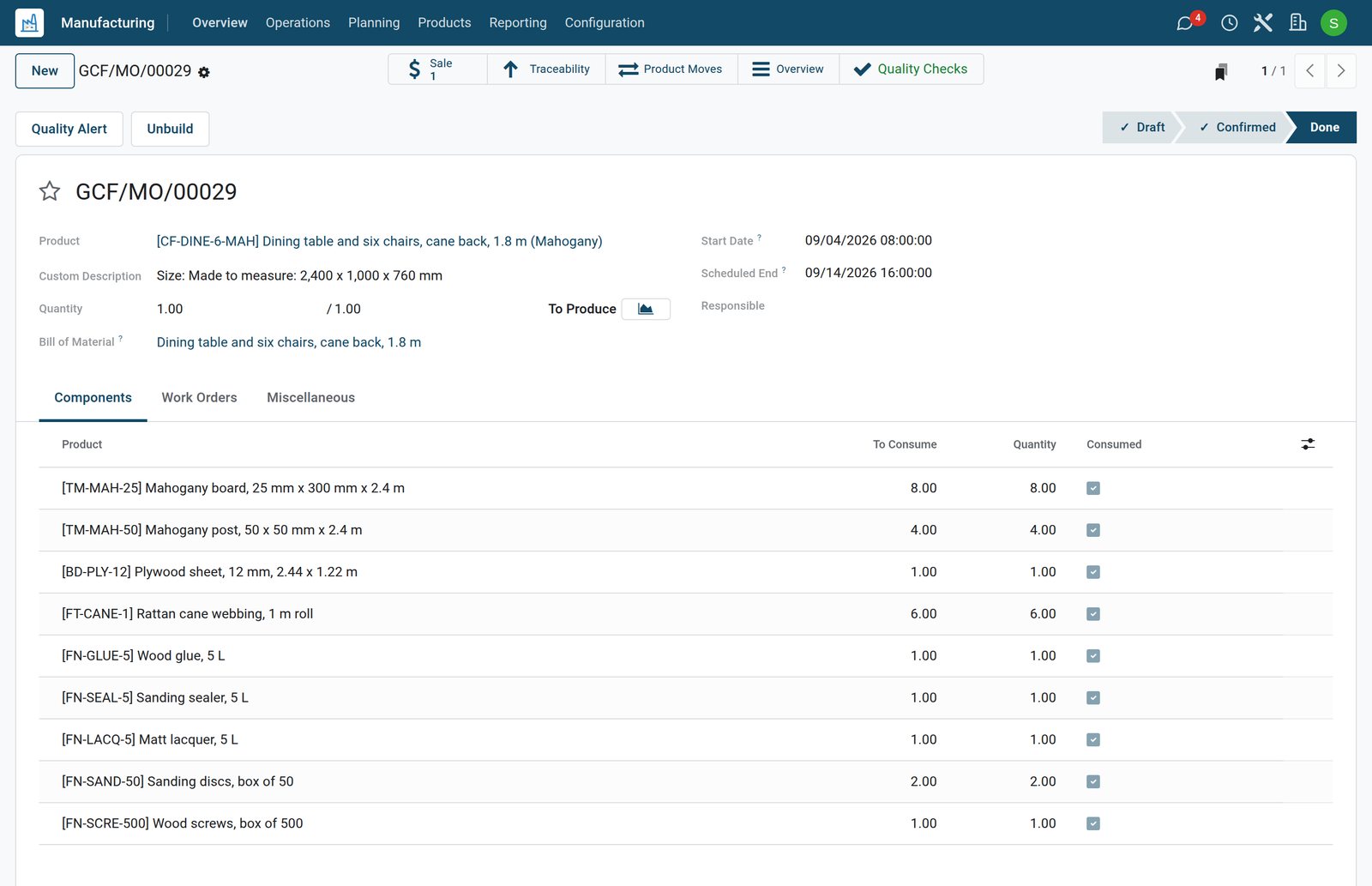
- Manufacturing
What each bench is on
The machine shop, both benches and the booth, each with the piece in front of it and what is queued behind.
Explore Manufacturing →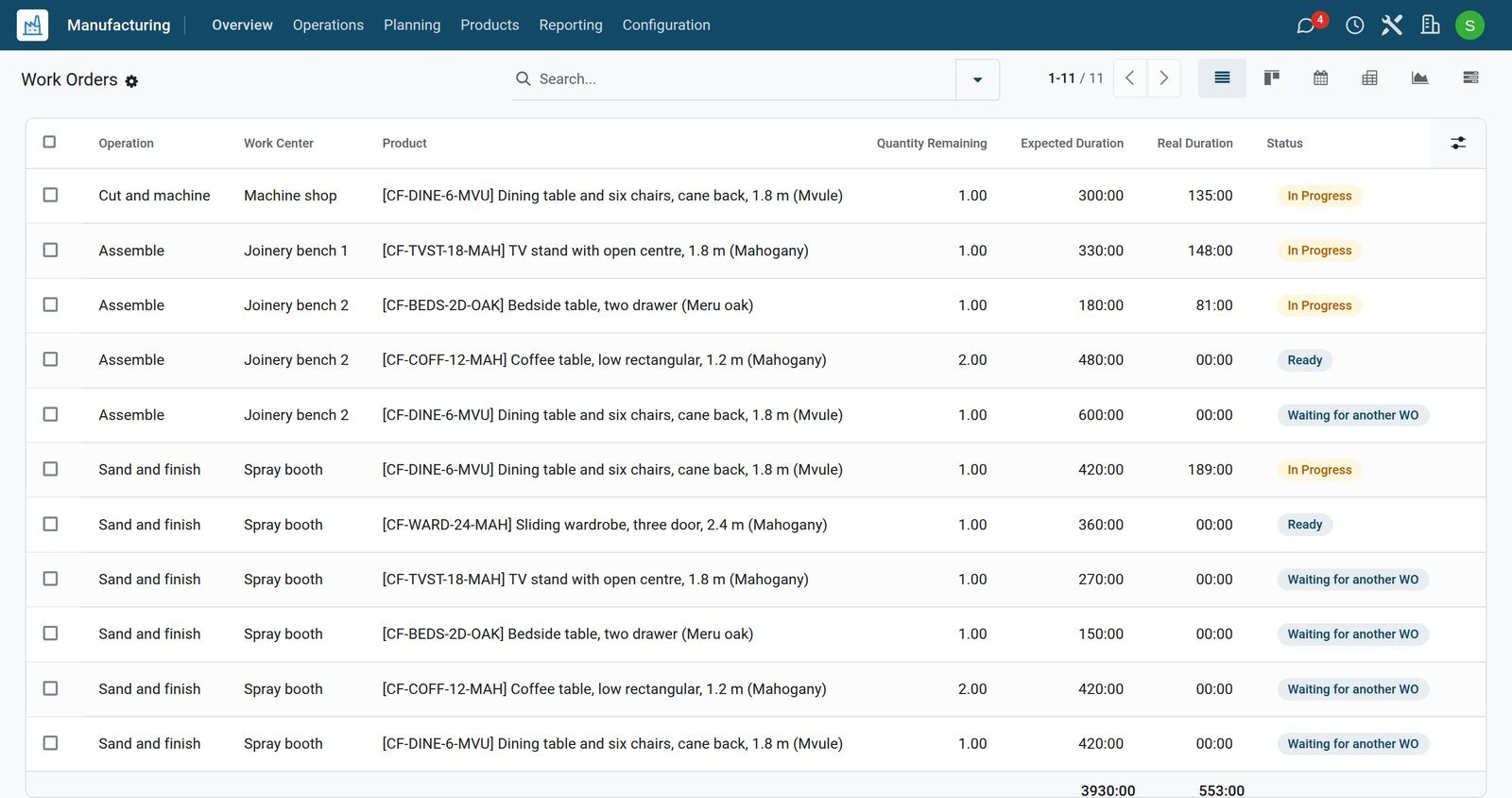
- Manufacturing
The floor at a glance
Five work centres, with the work waiting at each one.
Explore Manufacturing →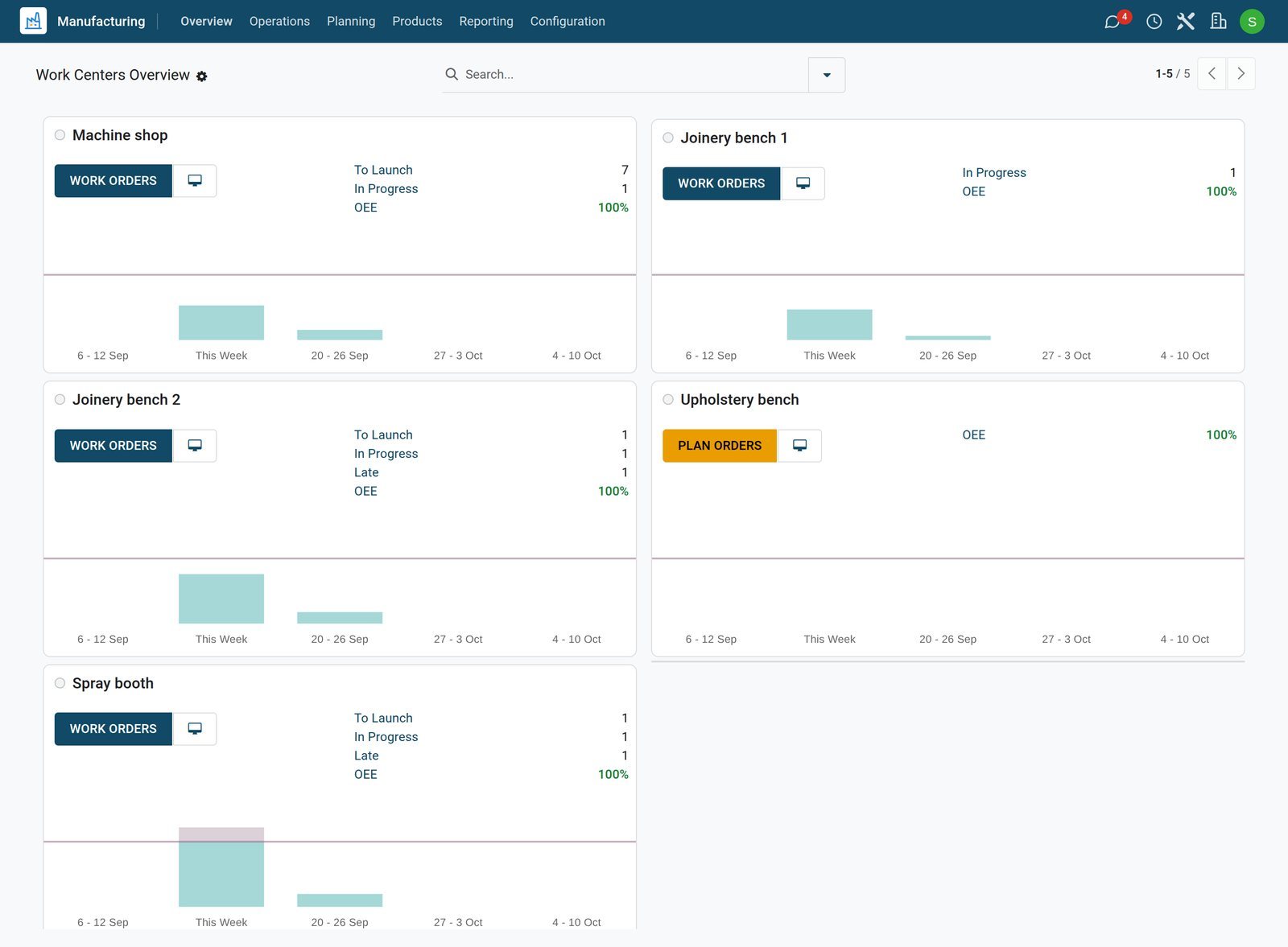
The cut list and what it takes
One bill of materials per piece, and a reorder point on the timber and the board it eats.
 Manufacturing
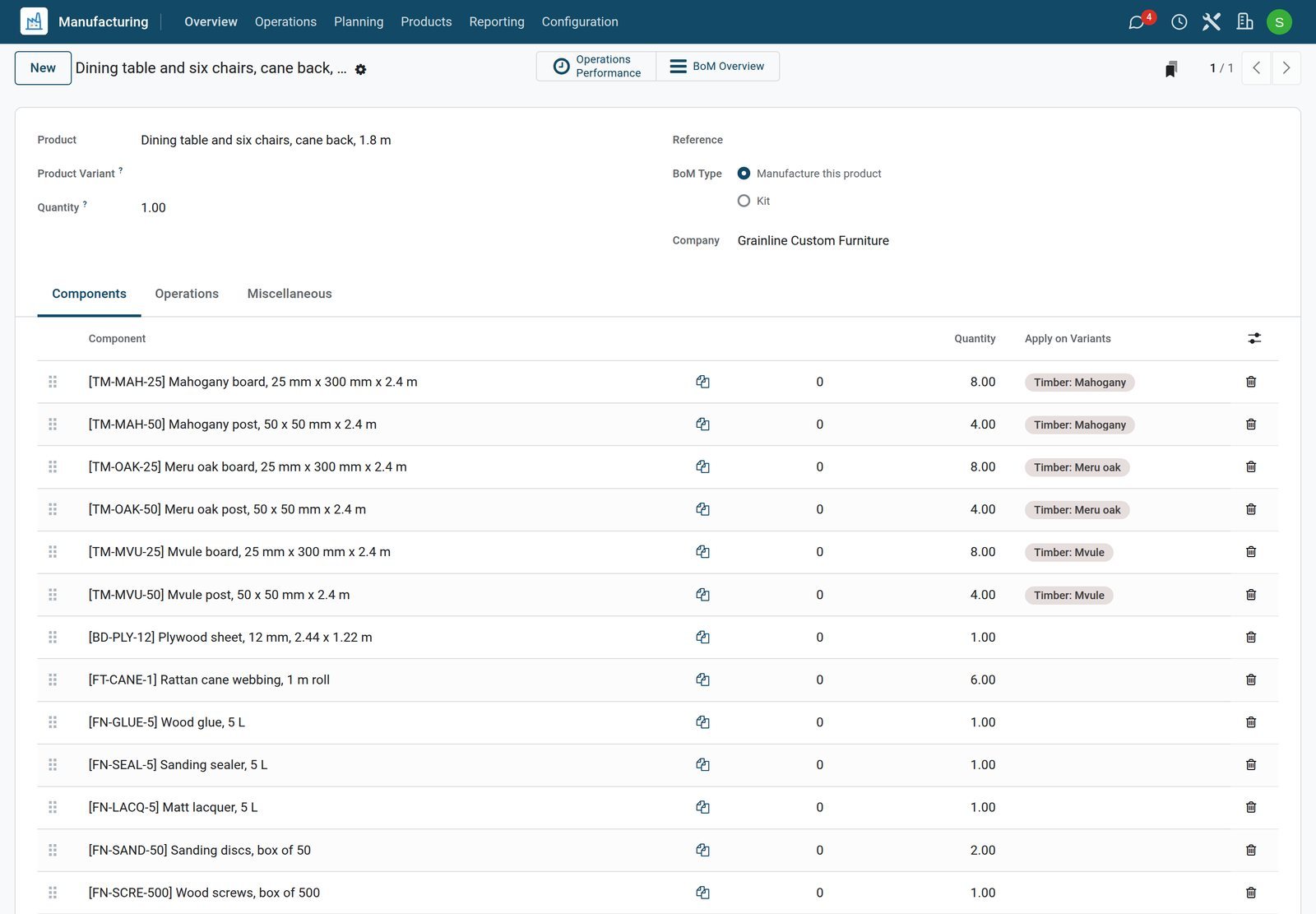
The cut list for one piece
Boards, posts, ply, cane and finishes for one dining table, with the board line for each timber it can be made in.
Explore Manufacturing →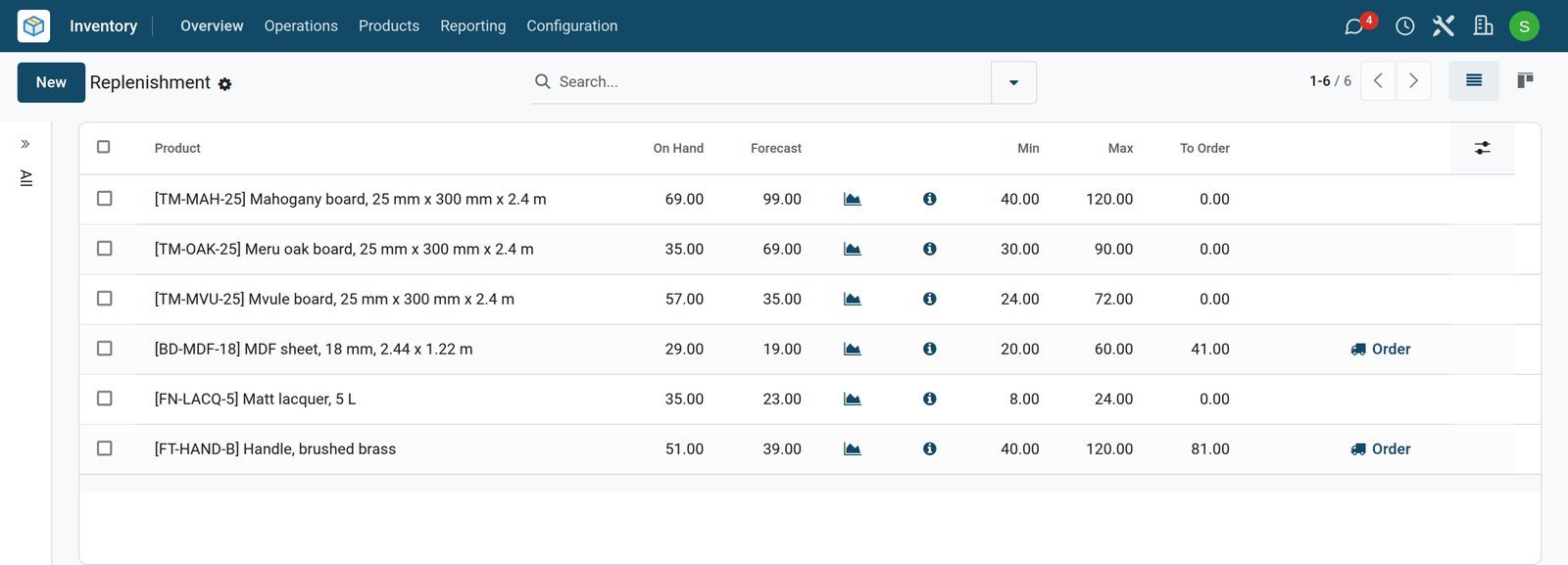 Purchase
What to buy before a job stops
The timber, board, lacquer and handles that have fallen under their minimum, with the quantity that fills the rack.
Explore Purchase →Checked before it goes
The checks are set up once and the work raises them; nothing is signed off on memory.
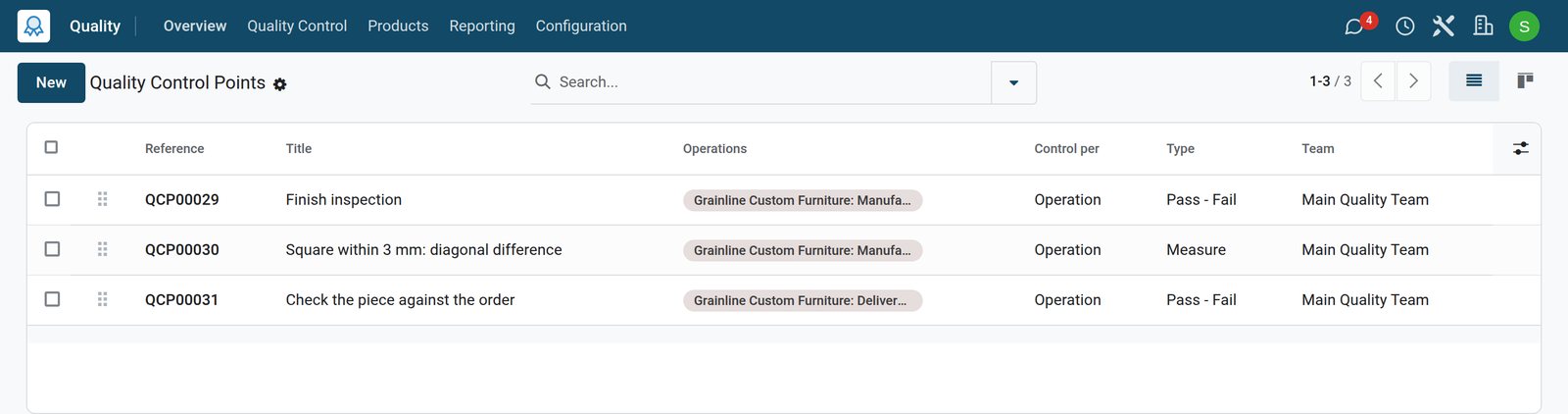
 Quality
Three things that get checked
A finish inspection, a squareness measurement and a last look against the order before loading.
Explore Quality →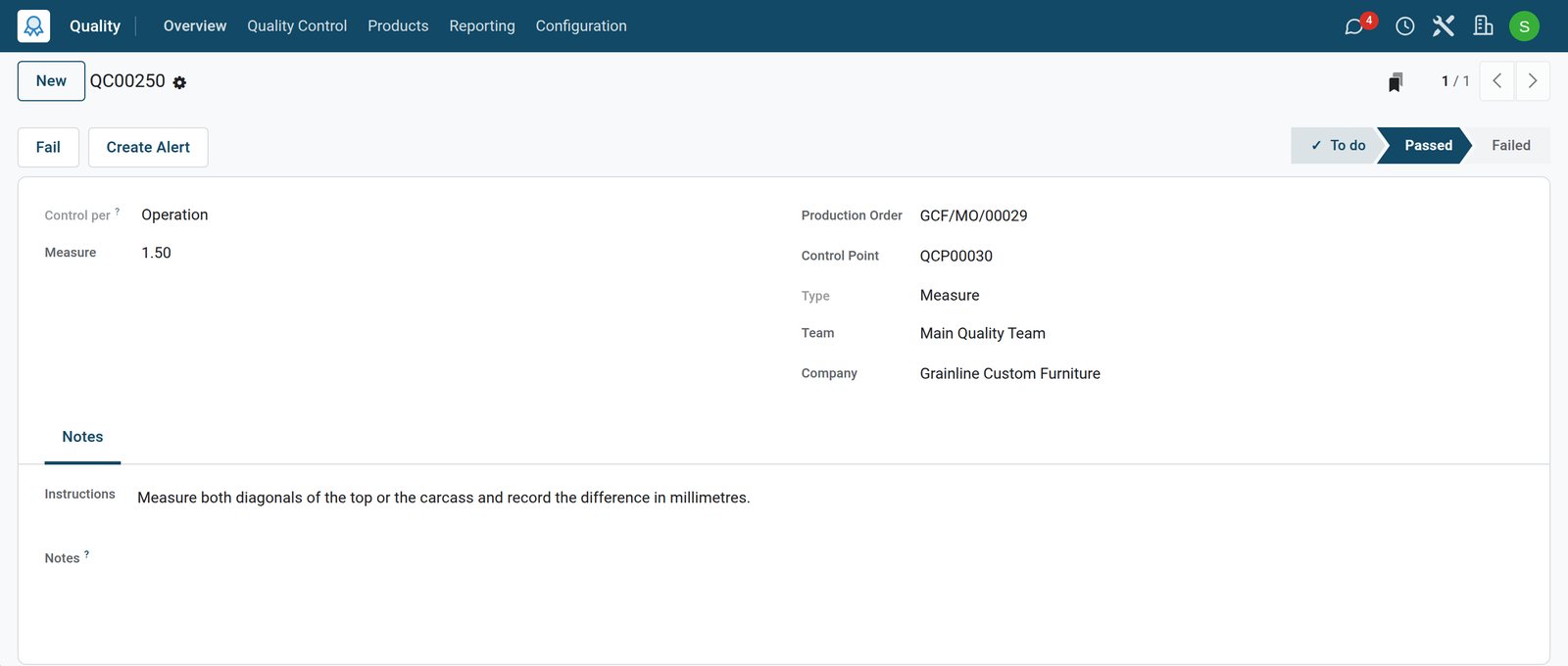 Quality
A measurement, kept
The diagonals of that dining table came out 1.5 mm apart, inside the three the shop allows.
Explore Quality →Out of the door and on the books
The delivery note carries the job number, and the invoice list shows what is still owed.
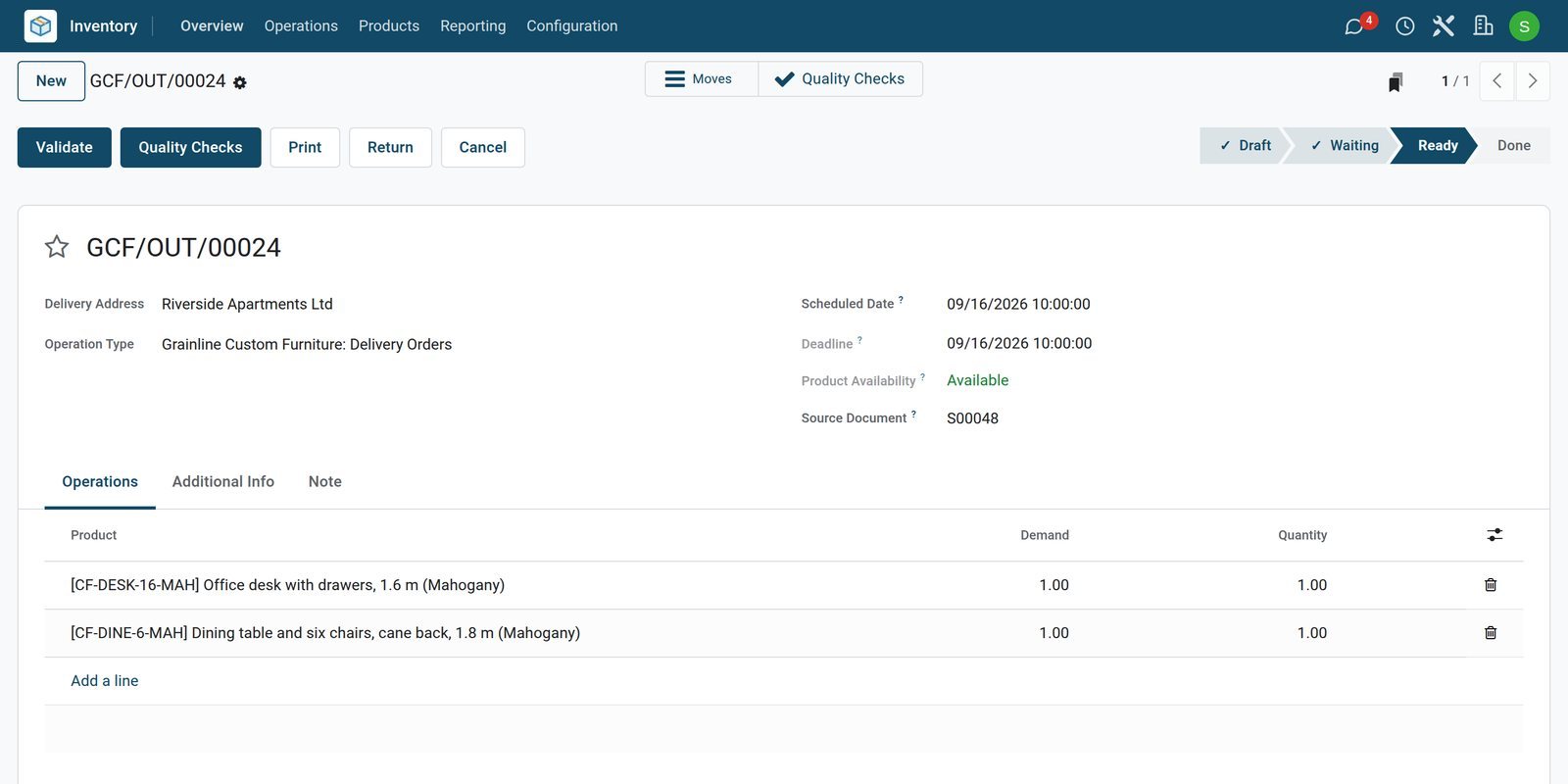
 Inventory
Ready to load
The desk and the dining table for one customer, checked and standing in the bay for this morning.
Explore Inventory →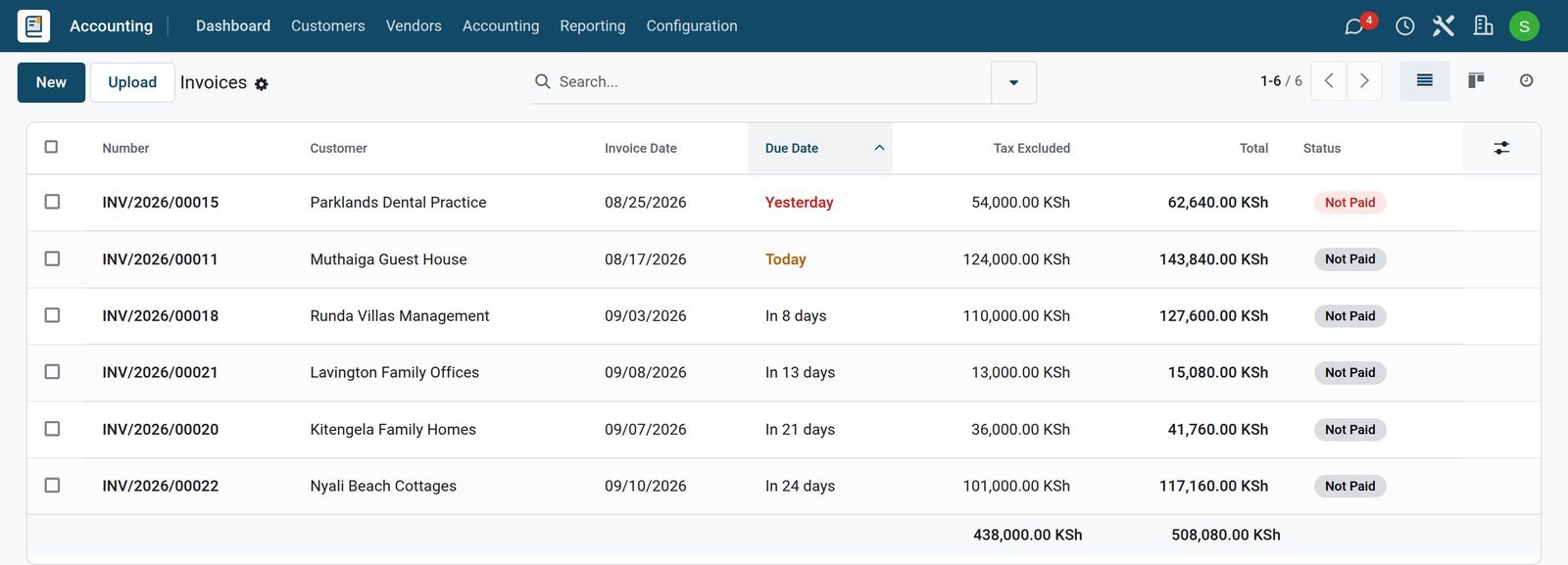
 Accounting
What is still owed
The invoices raised on delivery that are still open, the ones that have run out of time first.
Explore Accounting →Who uses it
Who uses it, and what they see
One system for the showroom, the floor, the store and the books.
The salesperson
Takes the sizes, picks the timber, prices the piece and turns the quotation into a job.
The foreman
Sees every job on the floor, which bench it is on and what is queued behind it.
The man on the bench
Reads the cut list for the piece in front of him and reports what he used.
The office
Invoices the job when it goes out, chases what is open and buys the timber back.
Works with
The apps a workshop runs
What the demo company has switched on, and what each one does here.
- SalesQuotes with the customer's sizes
- ManufacturingCut lists, benches and work orders
- QualityChecks the work raises itself
- InventoryTimber in, finished pieces out
- PurchaseTimber, board, hardware and finishes
- AccountingInvoices on the job, and what is owed
 ProjectFit-outs that run over several rooms
 Field ServiceFitting and putting right on site
In your country
Your currency, taxes and papers
Set to the country the workshop sells in.
Company currency
Quotations, invoices and stock are kept in the currency of the company; the demo workshop trades in KES.
Tax on the quoted price
Pieces are quoted without tax and the invoice adds it; the demo follows a Kenyan example at 16 per cent.
Electronic invoicing where it is required
Where a country asks for it, every invoice carries the item data the tax authority wants; the demo has the Kenyan connector in demo mode.
Accounting by country
Accounting packages for more than 100 countries set up the chart of accounts, the taxes and the tax report.
Getting started
Getting started
How a workshop moves onto BridgeERP.
List what you make
One product per piece, with the timbers as an attribute and a made-to-measure size the salesperson types.
Write the cut lists
One bill of materials per piece, with the board line for each timber it can be made in.
Draw the floor
A work centre for the machine shop, one for each bench, one for the upholstery and one for the booth.
Switch on make to order
Put the make and replenish-on-order routes on the pieces, set a minimum on the timber, and the first order raises its own job.
Questions
Questions about Custom Furniture Production
Not covered here? Contact us.
Can we quote a piece at the size the customer asks for?
Yes. The size is an attribute with a value the salesperson types, so the line reads "Made to measure: 2,400 x 1,000 x 760 mm" and the same words follow the job to the floor and onto the delivery note.
Do we have to keep a product for every size and timber?
No. The timber is a variant, because the cut list changes with it; the size is typed on the order line and creates no product at all. Ten pieces in three timbers is thirty variants, not three hundred.
Does the order make the job, or do we raise it by hand?
Confirming the order raises a manufacturing order for each piece on it, with the order number as the source document. Nothing is made without an order behind it.
Can the cut list change with the timber?
Yes. A bill of materials line can be set to apply only to some variants, so the mahogany boards are on the mahogany table and the mvule boards on the mvule one, from the same list.
Can we see what each bench is doing?
Yes. Each step is a work order on a work centre, so the machine shop, the two joinery benches, the upholstery bench and the spray booth each show the piece in front of them and the queue behind.
How do we stop a piece leaving with a fault?
Control points raise the checks: a finish inspection and a squareness measurement on every piece while it is still on the floor, and a check against the order before it is loaded.
Will it tell us what timber to buy?
Yes. Every material can carry a minimum and a maximum, and the replenishment list shows what has fallen under it and how much to order to fill the rack.
Can we run fit-outs that are bigger than one piece?
Yes. Project and Field Service are on the same database, so a fit-out can be run as a project with its tasks and site visits while each piece is still its own job.
Tax compliance
Invoices your tax authority accepts
In Kenya, Uganda, Rwanda, Burundi and Zambia, each invoice, receipt and stock movement goes to the tax authority's own system when you post it. Ghana and Pakistan come next, and we connect 73 more countries on request.
- KenyaReady
eTIMS KRA
Invoices, credit notes, POS receipts and stock movements
- UgandaReady
EFRIS URA
Invoices, POS receipts and stock
- RwandaReady
EBM RRA
Invoices, POS receipts, stock and imports
- BurundiReady
EBMS OBR
Invoices, POS receipts, stock and manufacturing
- ZambiaReady
Smart Invoice ZRA
Invoices, POS receipts, stock and imports
Custom Furniture Production, app by app
One connected flow instead of separate systems — the work moves from one team to the next without re-typing anything.
Every stop is a real app in your plan, and the hand-offs between them are the product.
- Customers & sales
- Operations
CRM
Leads, opportunity pipeline, activities and sales forecasting.
CRM →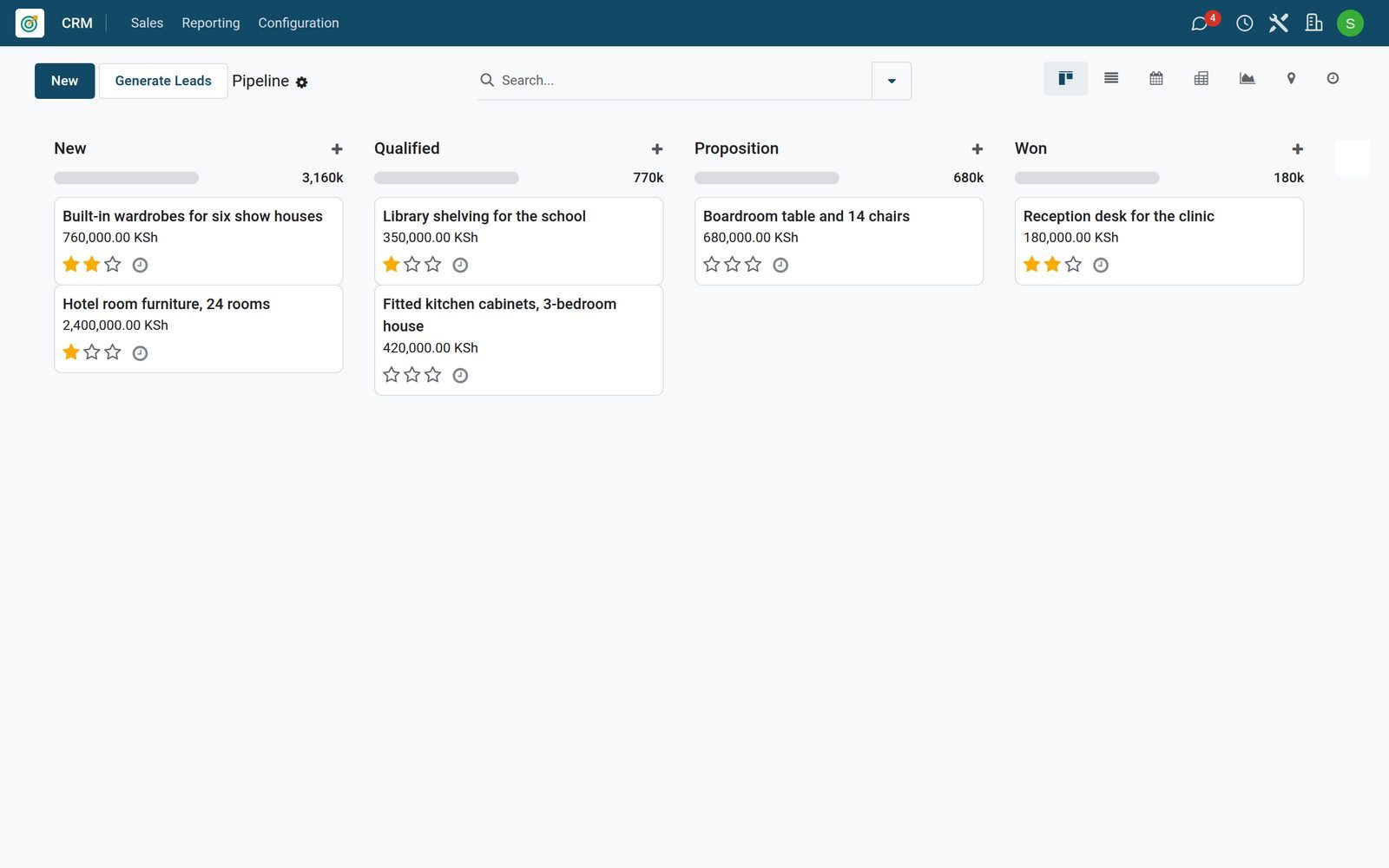
Ready when you are
Open the plan builder with the right apps for this industry already selected, or see it running first.