

Micro Brewery: Brew it, ferment it, bottle it, sell it
BridgeERP holds the recipe for every beer, follows each batch from the mash to the crate, and sells it to the trade the day it is bright.
Free instant access. No credit card required.
 Invoicing
 CRM
CRM Email Marketing
 Manufacturing
 Point of Sale
 Purchase
A recipe for every beer
The bill of materials holds the grain bill, the hops, the yeast and the glass for one brew, and the three things that happen to it.
- Manufacturing
The grain bill, in one place
One brew of pale lager: the malt, the hops, the yeast and the glass it takes to fill four hundred crates.
Explore Manufacturing →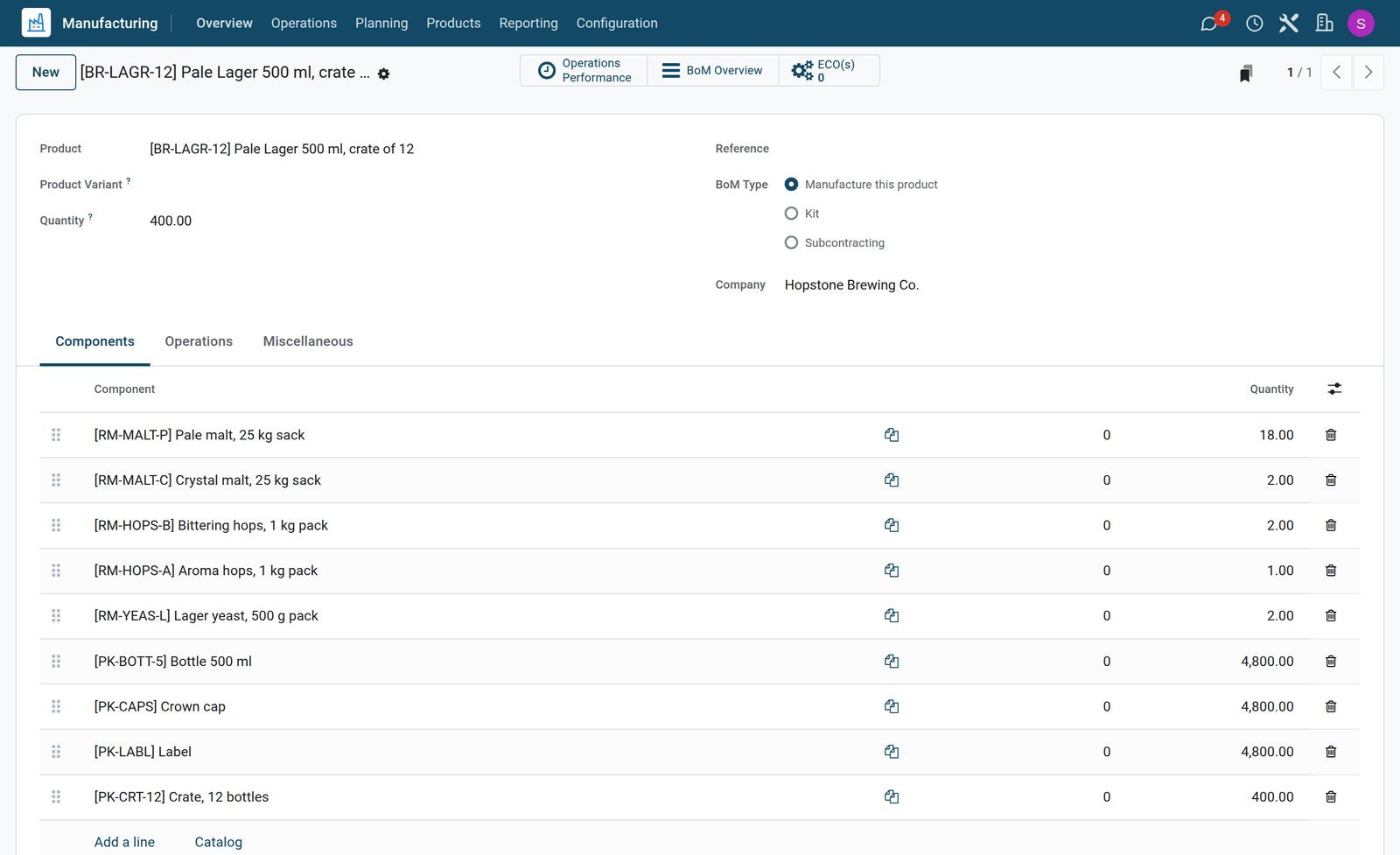
- Manufacturing
What happens to it, and where
The same recipe's three steps: the brewhouse, a fortnight in a tank and a morning on the bottling line.
Explore Manufacturing →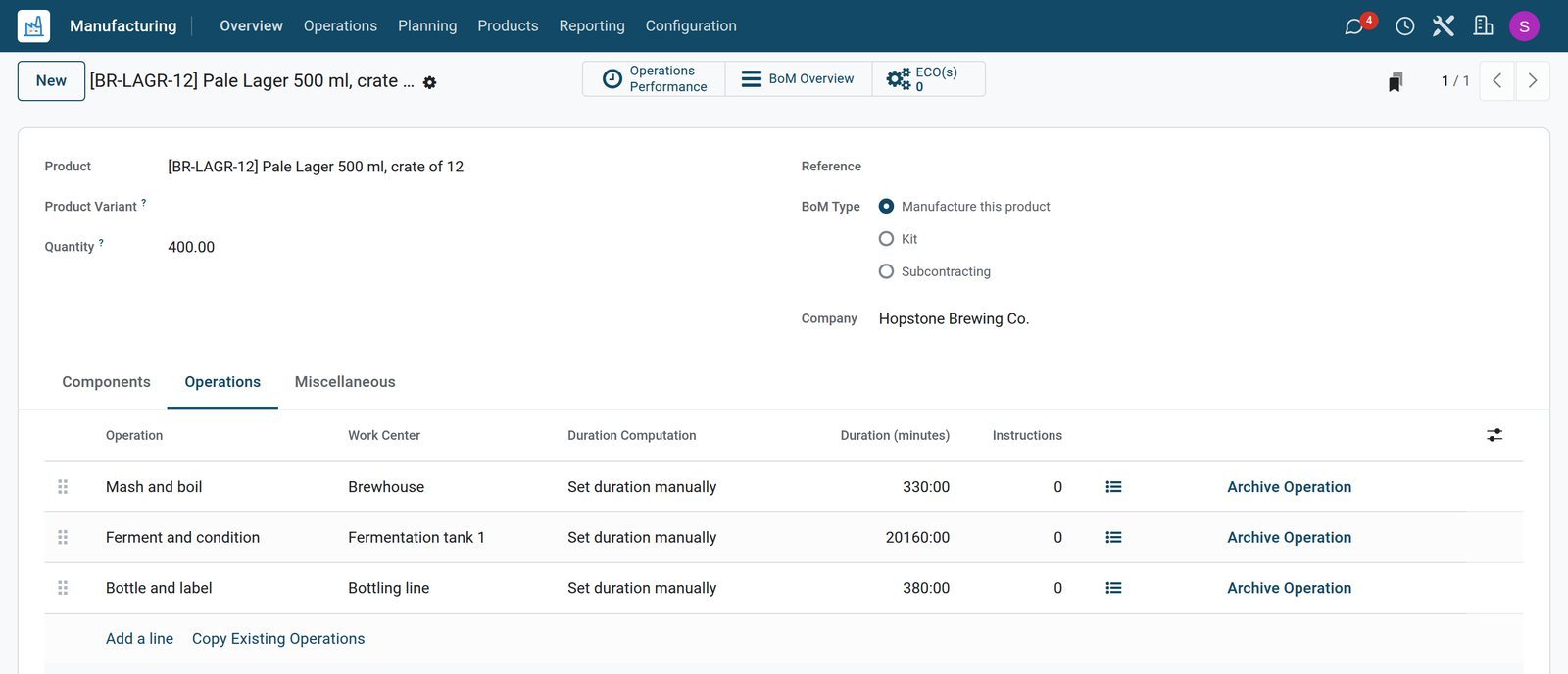
 Product Lifecycle
A recipe change, on the record
More aroma hop in the amber ale: written up against the recipe, in review, and not on the floor until it is approved.
Explore Product Lifecycle →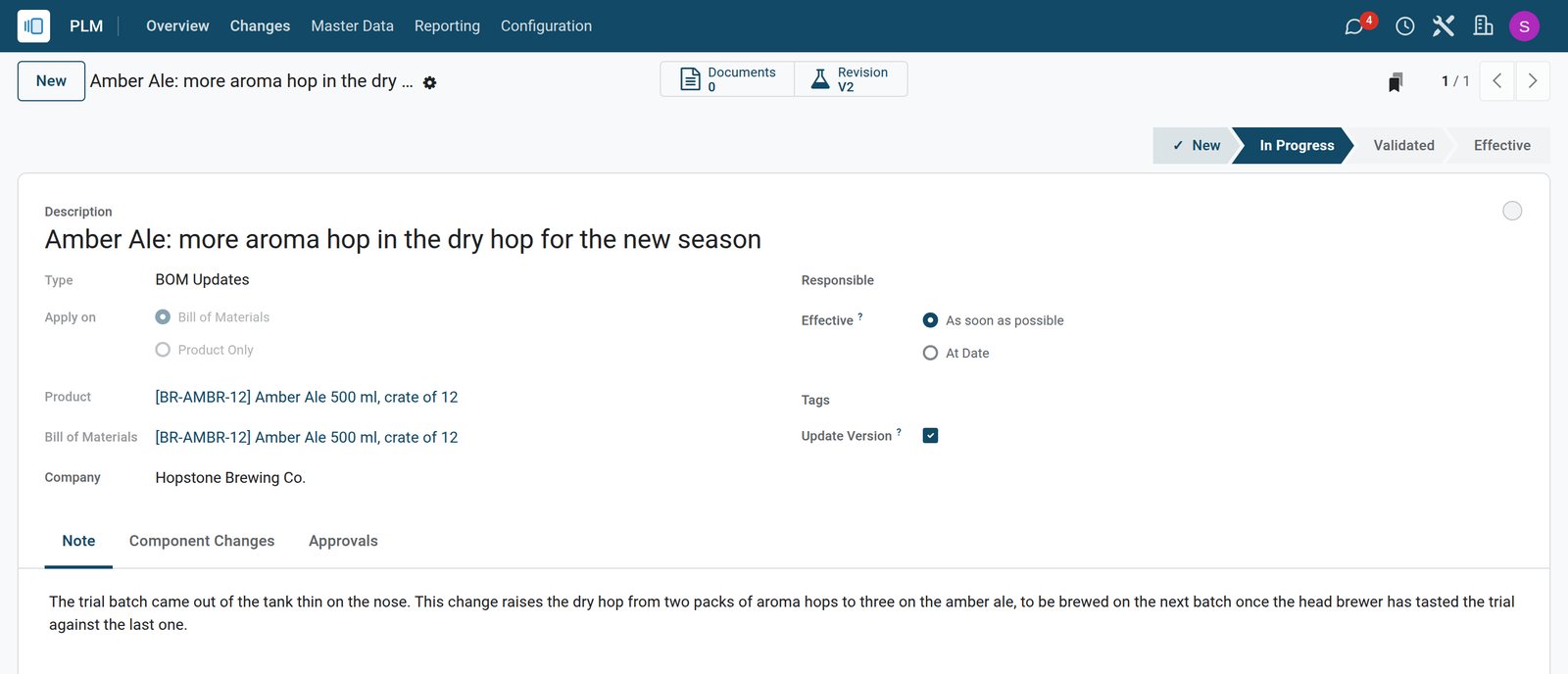
By the numbers
What ships inside
Counted in the product.
- 6
- states a batch moves through, from draft and confirmed to in progress, done and cancelled
- 6
- states a work order moves through, so the floor always knows what is ready to start
- 3
- kinds of bill of materials: manufacture this product, a kit, or work given to a subcontractor
- 4
- stages an engineering change passes through, from new to effective
Inside the app
What is inside
The apps a brewery runs on, and what each does in the week.
A recipe per beer
The grain bill, the hops, the yeast and the packaging for one brew, in one place, with the version that is in force.
The brew schedule
Every batch carries the day it is mashed and the day it should be bottled, so the week on the floor is set before it starts.
A tank per brew
Fermentation is a work order on a tank, and the tanks stand in for one another, so a brew goes wherever there is room.
Every batch has a number
The finished beer is tracked by lot, so what a bar received can be followed back to the brew and the malt that went into it.
Malt and glass that reorder themselves
A reordering rule on the malt, the hops and the glass puts the next order in the replenishment list before the brewhouse runs dry.
Recipe changes on the record
A change to a recipe is written up, reviewed and only then applied, with what changed kept against the version it replaced.
The trade, on its own price list
Bars, bottle shops and hotels buy on the list they belong to, with a break for the ones that take a pallet at a time.
Delivered and invoiced
The crates go out on a delivery order and the invoice follows the same day, on the terms that customer trades on.
Step by step
From the grain to the bar
How a brew becomes beer on a shelf, and which app does each step.
- Step 1
Write the recipe
The grain bill, the hops, the yeast and the glass for one brew, with its three steps.
Manufacturing - Step 2
Put it on the schedule
A batch is raised for the day it will be mashed, and the components are reserved.
Manufacturing - Step 3
Mash and boil
The brewhouse work order takes the malt and the hops out of the store, by lot.
Manufacturing - Step 4
Ferment and condition
The brew sits in a tank until it is bright, and the tank shows what is in it.
Manufacturing - Step 5
Bottle and label
The bottling line fills, caps and packs the crates, and the batch gets its number.
Inventory - Step 6
Sell it to the trade
The crates go out on the round of orders and the invoice follows the delivery.
Sales
On the floor
A batch shows what went into it and what came out; the work orders show what each work centre is doing now.
- Manufacturing
A batch, start to finish
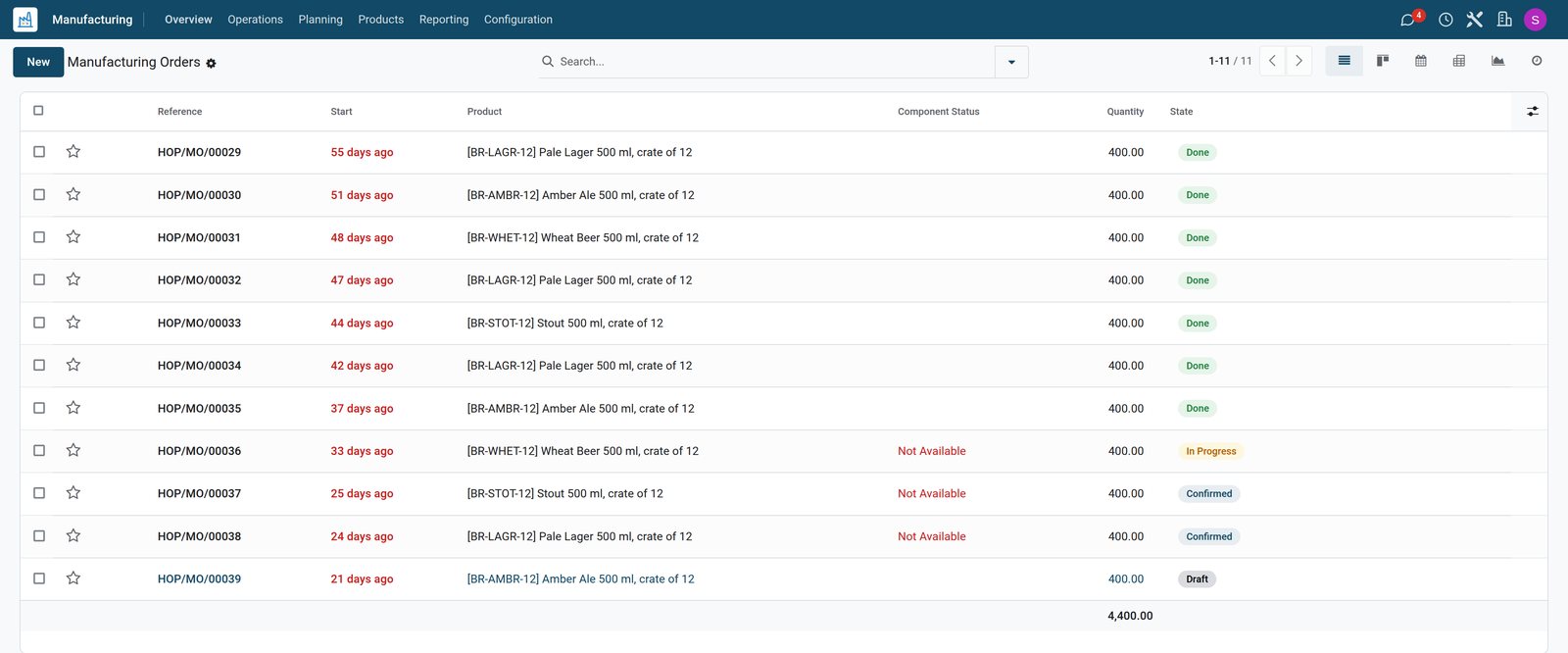
The lager bottled on the fifteenth: four hundred crates out, and every sack and pack that went in.
Explore Manufacturing →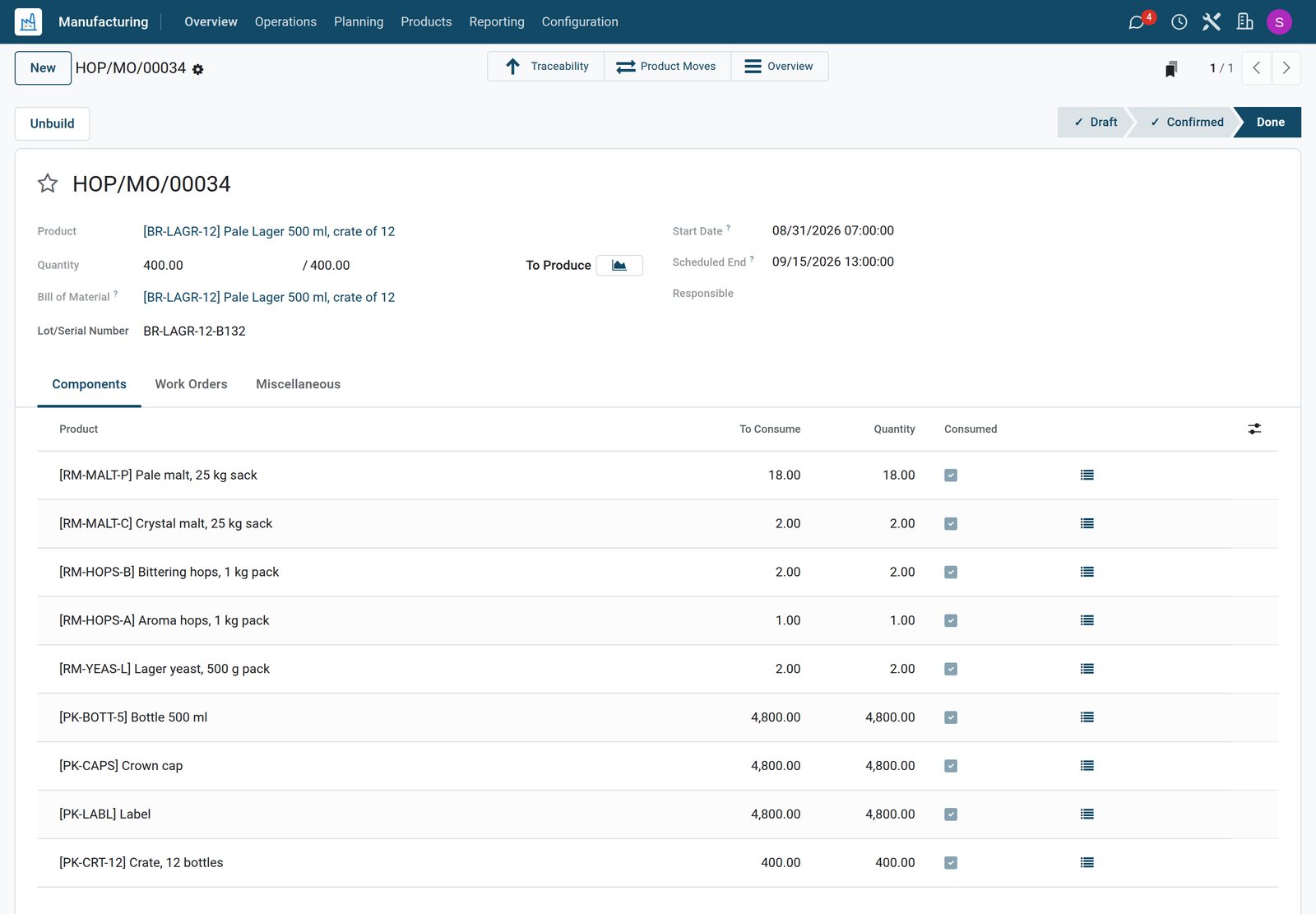
- Manufacturing
What is in the tanks now
The wheat beer in tank four: mashed a week ago, out of the tank on the seventeenth, then the bottling line.
Explore Manufacturing →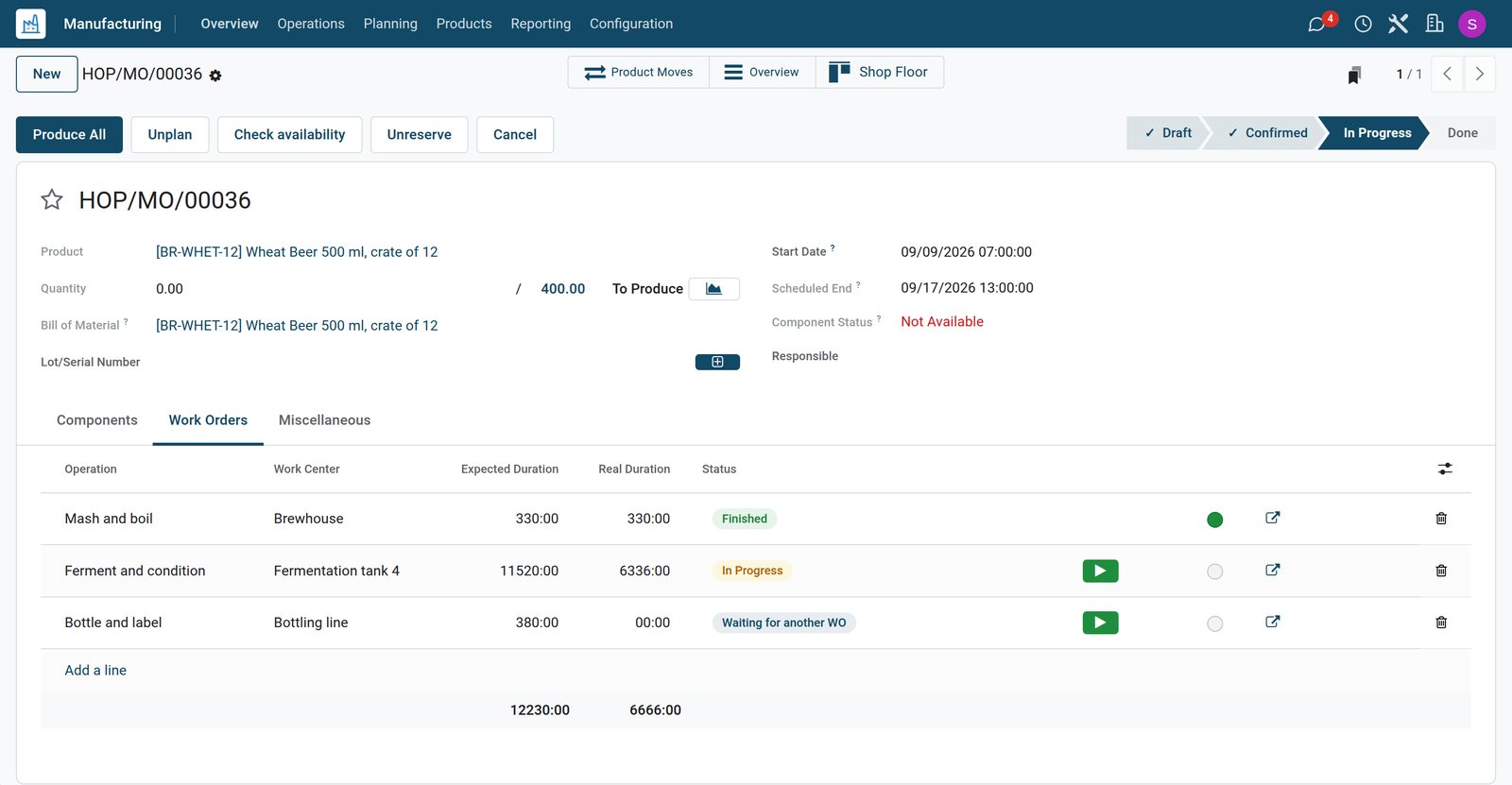
- Manufacturing
What each work centre is doing
Every work order still open, on the brewhouse, the four tanks and the bottling line; the brew still in draft has no times on it yet.
Explore Manufacturing →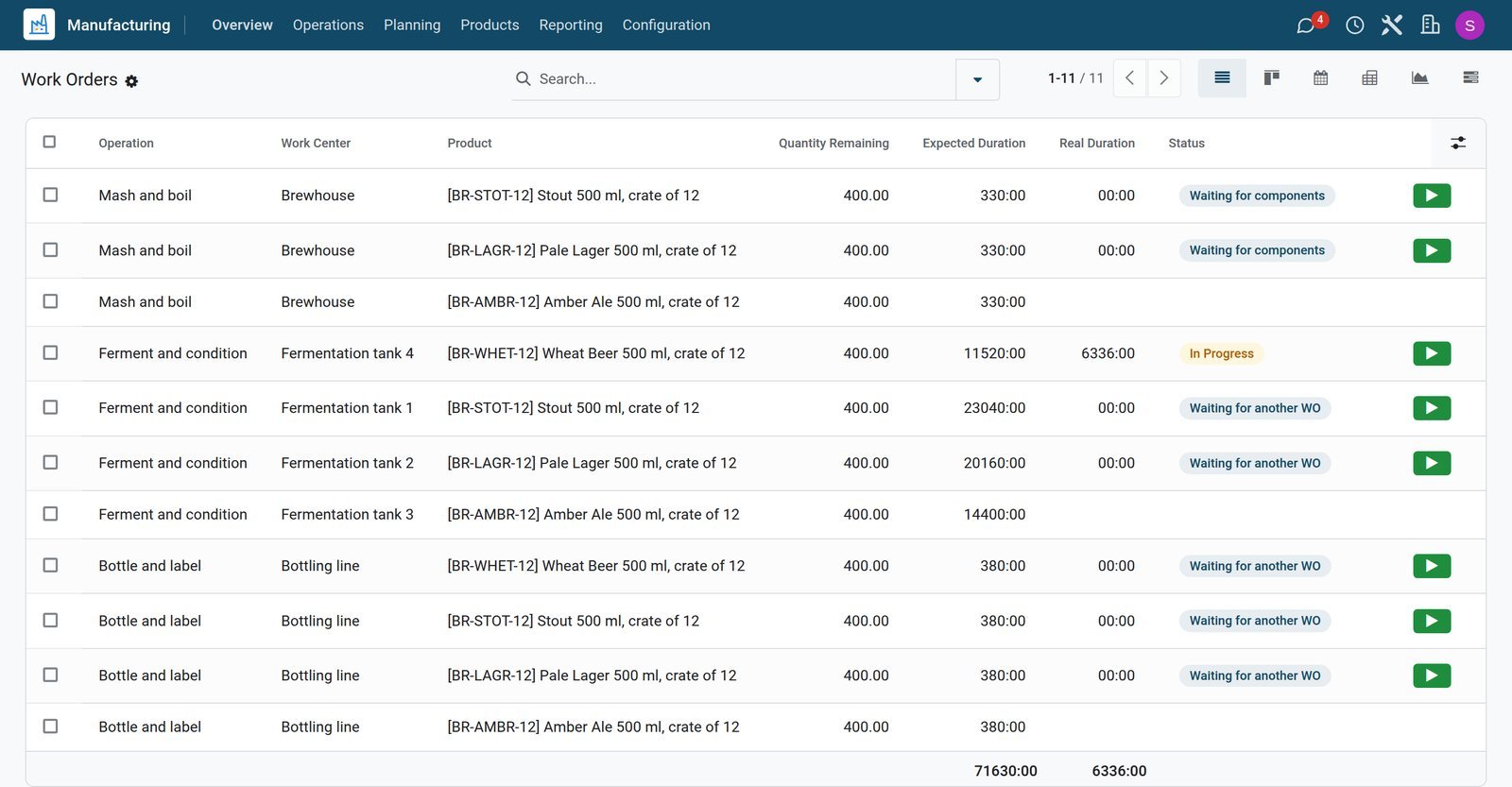
Every bottle has a batch
The beer is tracked by lot from the tank to the bar, so a question about one crate has an answer.
 Inventory
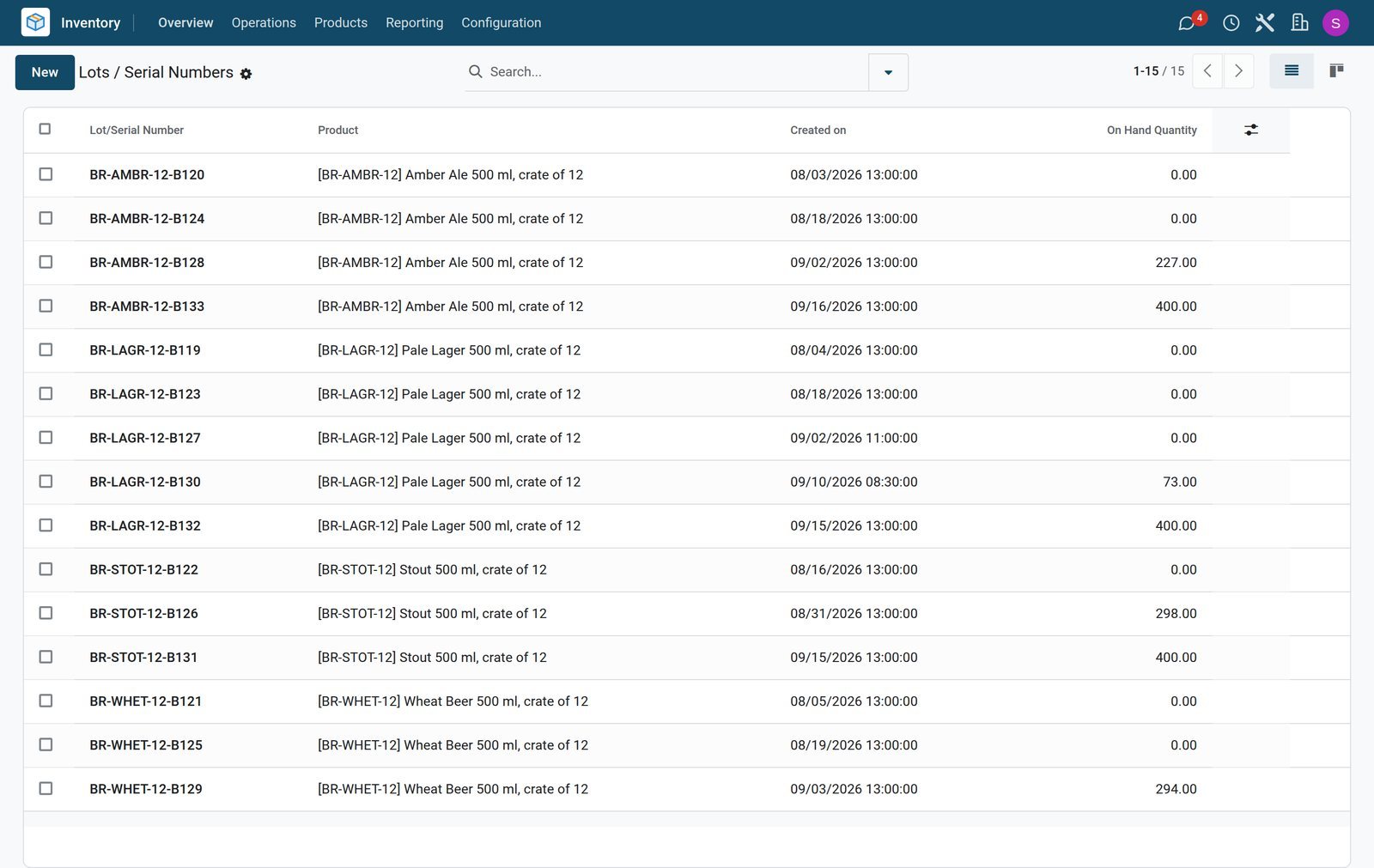
The batches on the books
Every batch the brewery has made, and how much of each is still in the cold store.
Explore Inventory →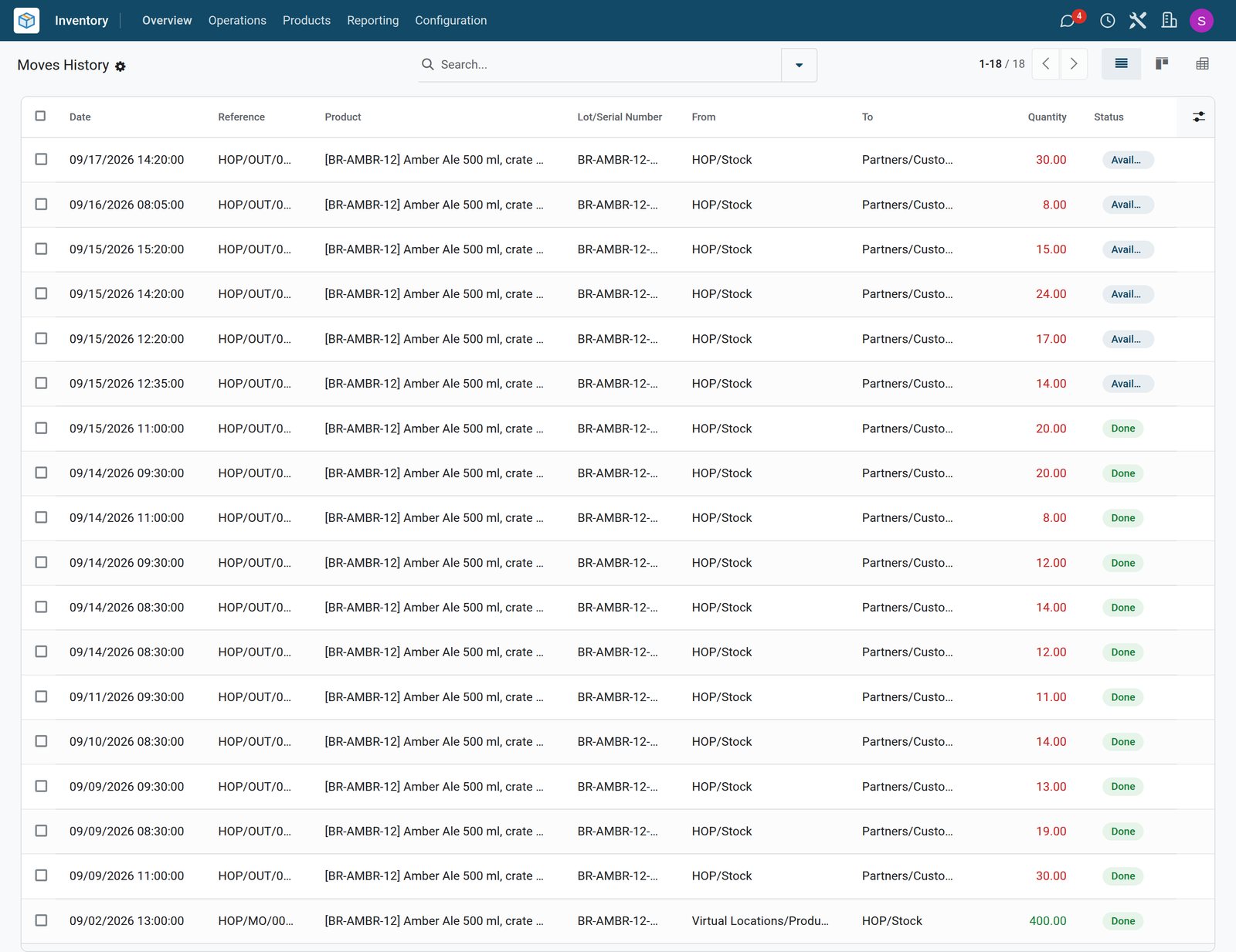 Inventory
One batch, tank to bar
One batch of amber ale, from the four hundred crates that left the tank to every bar that took some.
Explore Inventory →Selling it
The trade orders by the crate, the crates go out on the day they are wanted, and the invoice list shows what is still out.
 Sales
SalesAn order from the trade
A coast hotel's order: amber ale, wheat beer and lager by the crate, on the trade price list.
Explore Sales →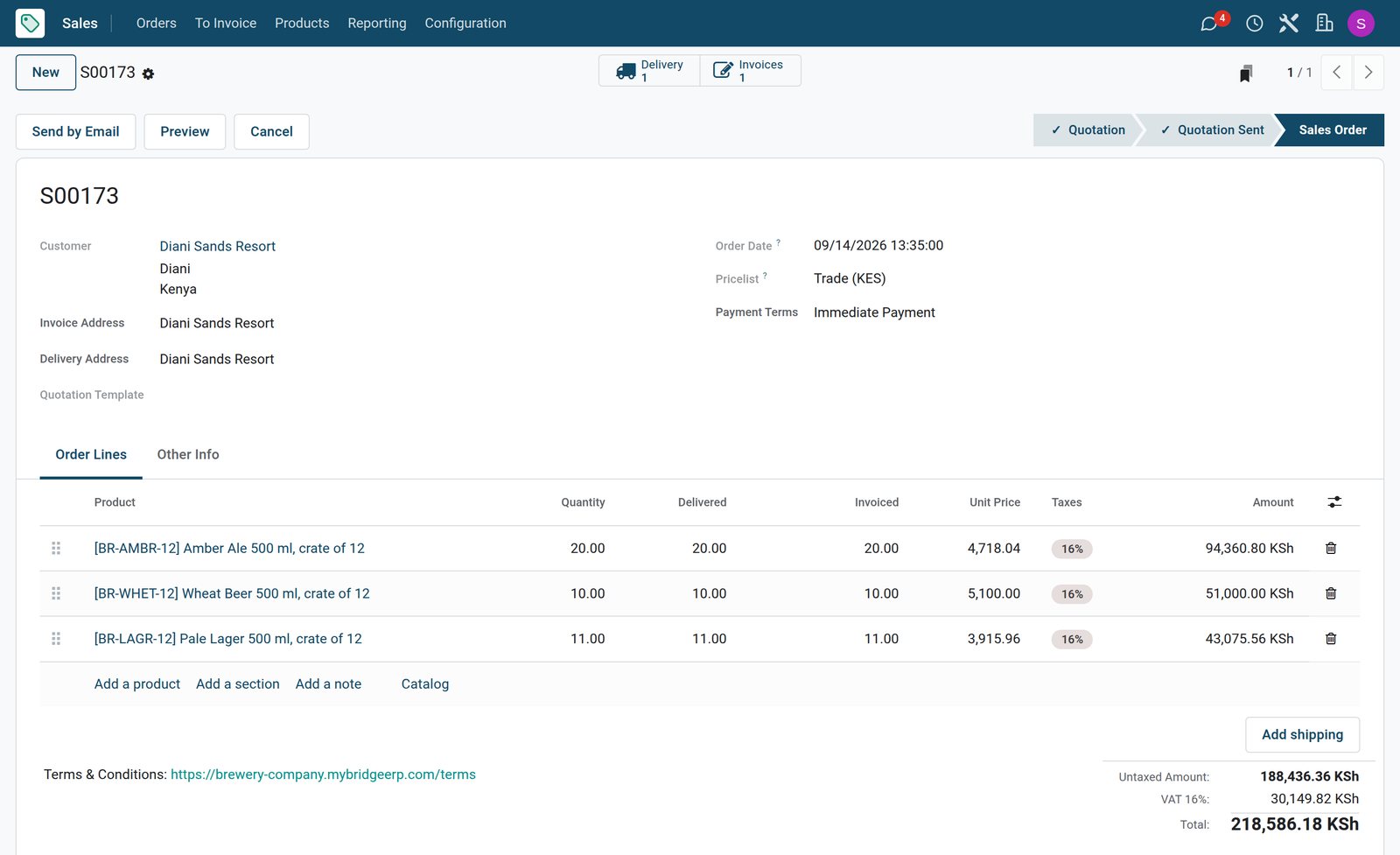
- Inventory
What goes out this morning
The crates to load today and tomorrow, each against the order that asked for them.
Explore Inventory →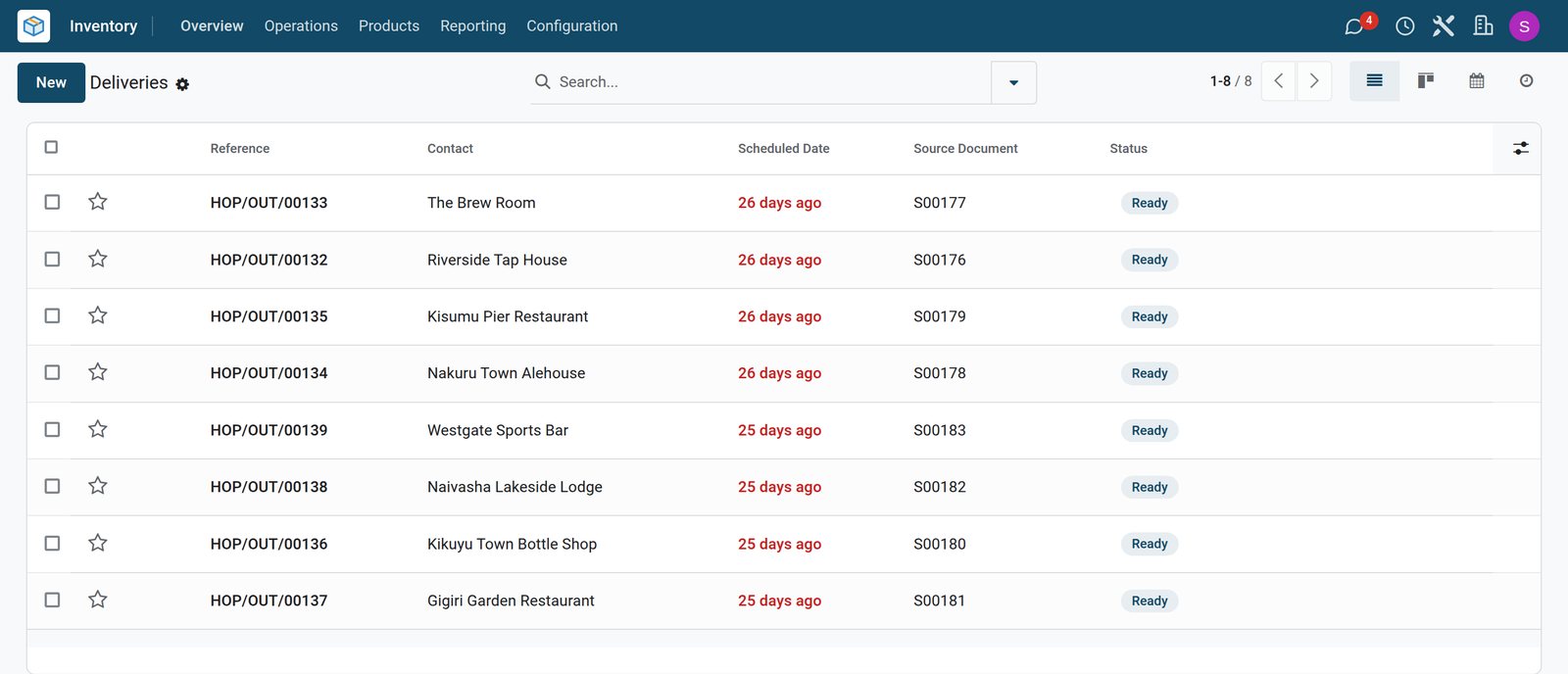
 Accounting
What is still out
What the trade still owes, the invoices already past their date at the top.
Explore Accounting →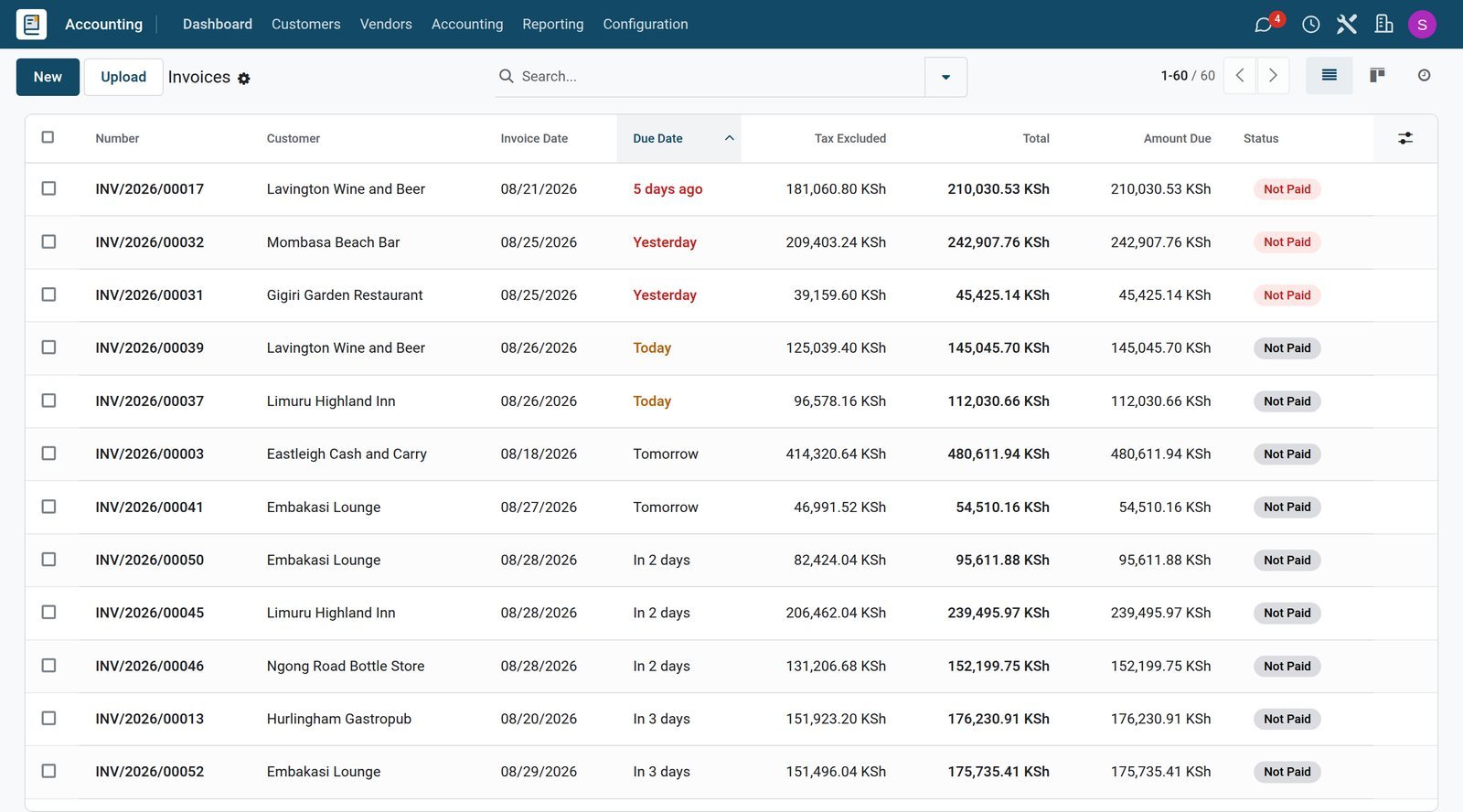
The brewery in numbers
How much of each beer has been brewed, and what the brewhouse needs ordered before the next one.
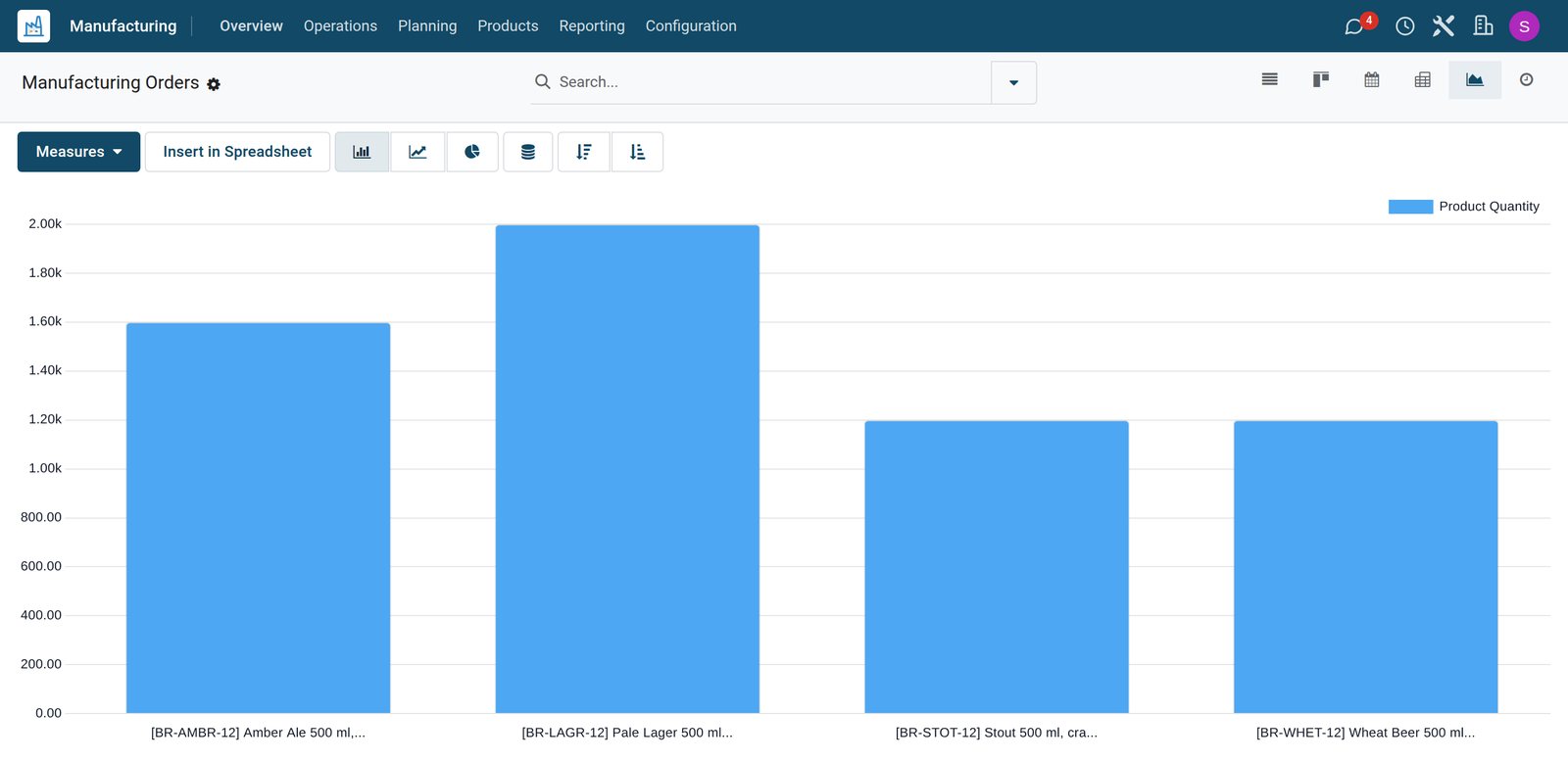 Manufacturing
What has been brewed
Crates brewed of each beer, so the next schedule follows what the trade is actually drinking.
Explore Manufacturing →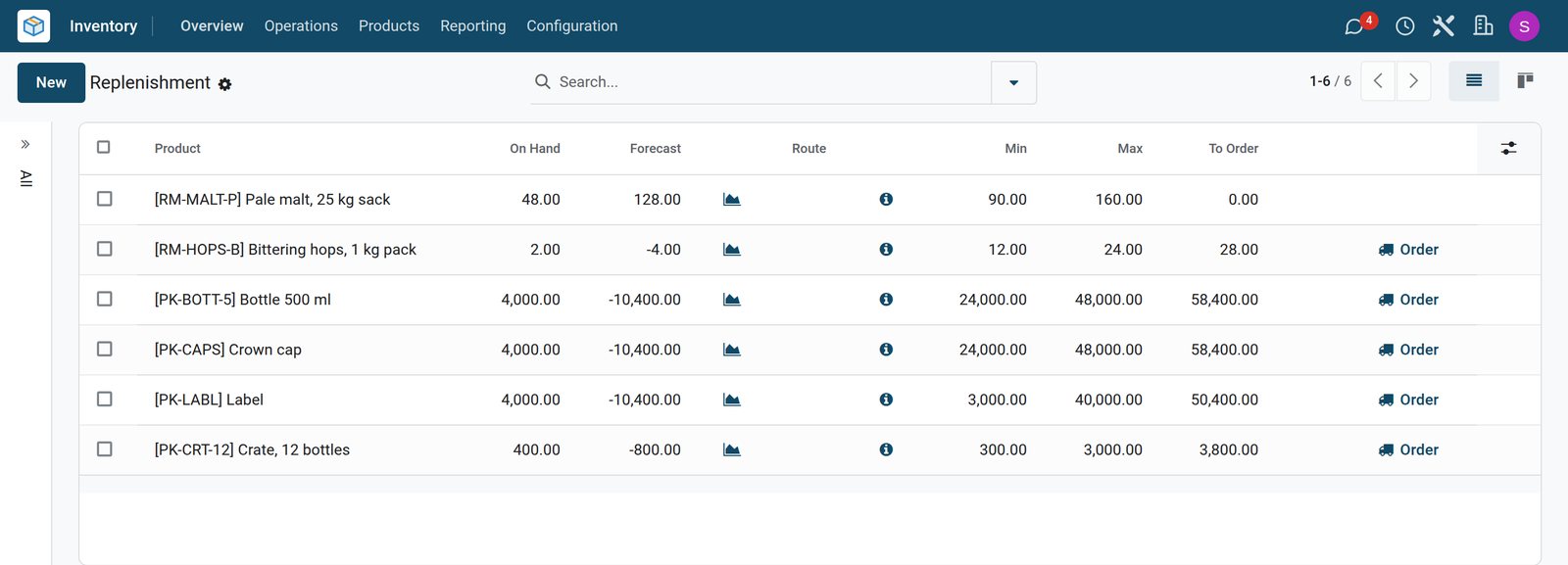 Purchase
What to order before the next brew
The malt, hops and glass that have fallen under their minimum, with the quantity that fills the store back up.
Explore Purchase →Who uses it
Who uses it, and what they see
One system for the brewhouse, the store, the office and the books.
Head brewer
Writes the recipes, sets the week's brews and approves a change before it reaches the floor.
Brewhouse and cellar
Works the open work orders, mashes, moves a brew to a free tank and bottles it.
Store and buyer
Watches the malt, hops and glass and orders the next load from the suppliers.
Sales and accounts
Takes the trade orders, loads the day's crates and follows what is still owed.
Works with
Runs with the rest of BridgeERP
Apps a brewery draws on.
In your country
Your currency, taxes and papers
Set to the country the brewery sells in.
Company currency
Price lists, invoices and stock are kept in the currency of the company; the demo brewery trades in KES.
Tax on the trade price
Trade prices are quoted without tax and the invoice adds it; the demo follows a Kenyan example at 16 per cent.
Electronic invoicing where it is required
Where a country asks for it, every invoice carries the item data the tax authority wants; the demo has the Kenyan connector in demo mode.
Accounting by country
Accounting packages for more than 100 countries set up the chart of accounts, the taxes and the tax report.
Getting started
Getting started
How a brewery moves onto BridgeERP.
Load the store
Bring in the malt, the hops, the yeast and the glass, and say which of them are tracked by lot.
Write the recipes
One bill of materials per beer, for the batch size the brewhouse actually makes.
Draw the floor
A work centre for the brewhouse, one for each tank and one for the bottling line, with the tanks as alternatives of one another.
Schedule the first brews
Raise a batch per brew, set a reordering rule on every raw material, and the week runs itself.
Questions
Questions about Micro Brewery
Not covered here? Contact us.
Can we keep a recipe per beer?
Yes. A bill of materials holds the grain bill, the hops, the yeast and the packaging for one brew, written for the batch size the brewhouse actually makes, with the three operations it goes through.
How are the fermentation tanks handled?
Each tank is a work centre, and fermentation is a work order on it. The tanks are set as alternatives of one another, so a brew can go into whichever one is free, and the schedule shows what is in each.
Can we follow a batch from the tank to the bar?
Yes. The finished beer is tracked by lot: the batch number is set when the brew is bottled, and the moves history shows the brew that made it and every delivery that took crates out of it.
What happens when a recipe changes?
A change is raised against the recipe as an engineering change order, moves through its stages while it is reviewed, and only applies to the batches brewed after it is approved.
Does the system tell us when to order malt and glass?
Yes. A reordering rule on each raw material holds a minimum and a maximum; the replenishment list shows what has fallen under the minimum, what the scheduled brews will still need, and how much to order.
Can we sell to the trade on different prices?
Yes. A price list per kind of customer is set on the account, and a list can drop the price again from a quantity of its own, so a wholesaler and a single bar buy on their own terms.
Tax compliance
Invoices your tax authority accepts
In Kenya, Uganda, Rwanda, Burundi and Zambia, each invoice, receipt and stock movement goes to the tax authority's own system when you post it. Ghana and Pakistan come next, and we connect 73 more countries on request.
- KenyaReady
eTIMS KRA
Invoices, credit notes, POS receipts and stock movements
- UgandaReady
EFRIS URA
Invoices, POS receipts and stock
- RwandaReady
EBM RRA
Invoices, POS receipts, stock and imports
- BurundiReady
EBMS OBR
Invoices, POS receipts, stock and manufacturing
- ZambiaReady
Smart Invoice ZRA
Invoices, POS receipts, stock and imports
Micro Brewery, app by app
One connected flow instead of separate systems — the work moves from one team to the next without re-typing anything.
Every stop is a real app in your plan, and the hand-offs between them are the product.
- Customers & sales
- Operations
CRM
Leads, opportunity pipeline, activities and sales forecasting.
CRM →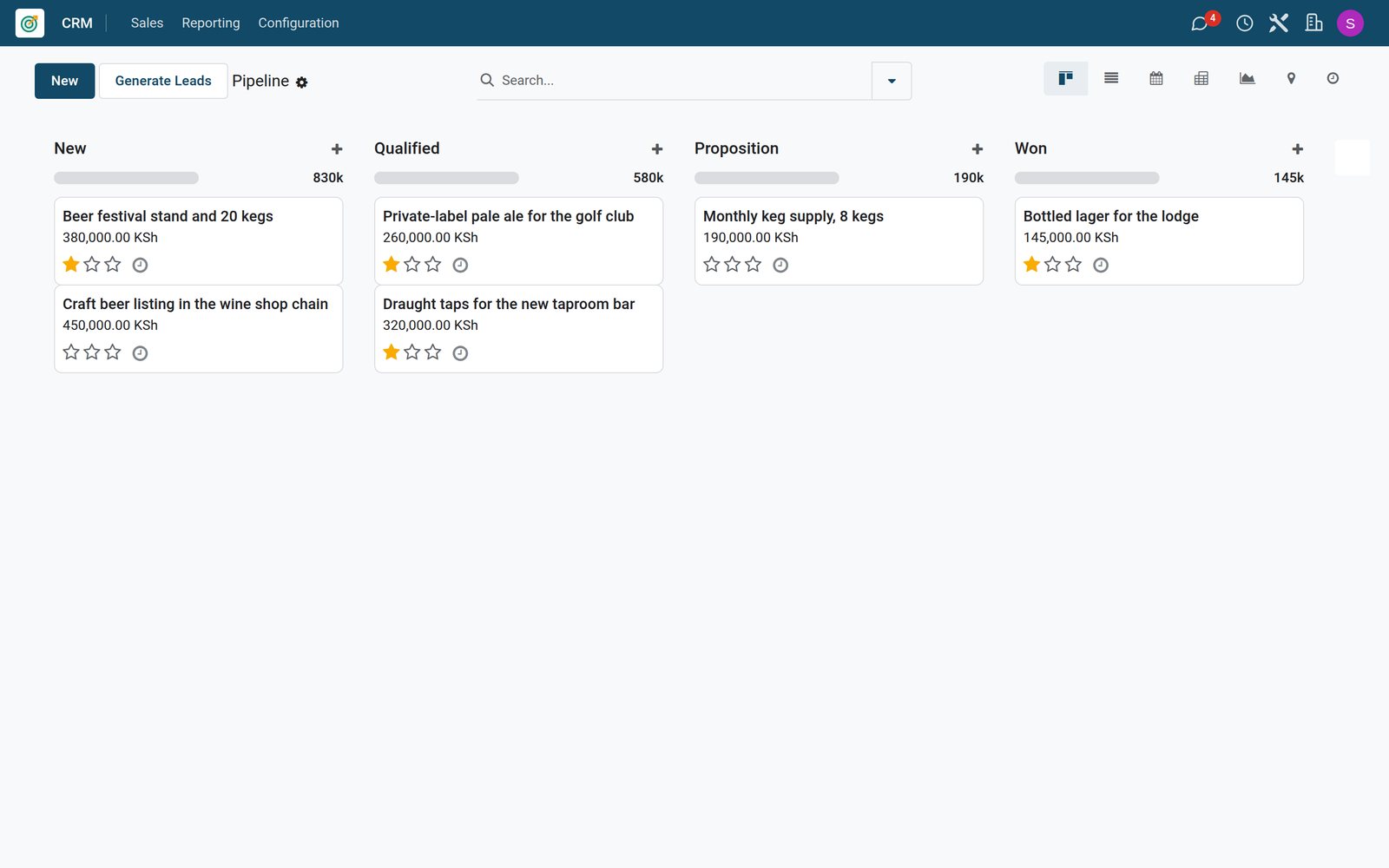
Ready when you are
Open the plan builder with the right apps for this industry already selected, or see it running first.